
Last updated October 16, 2026
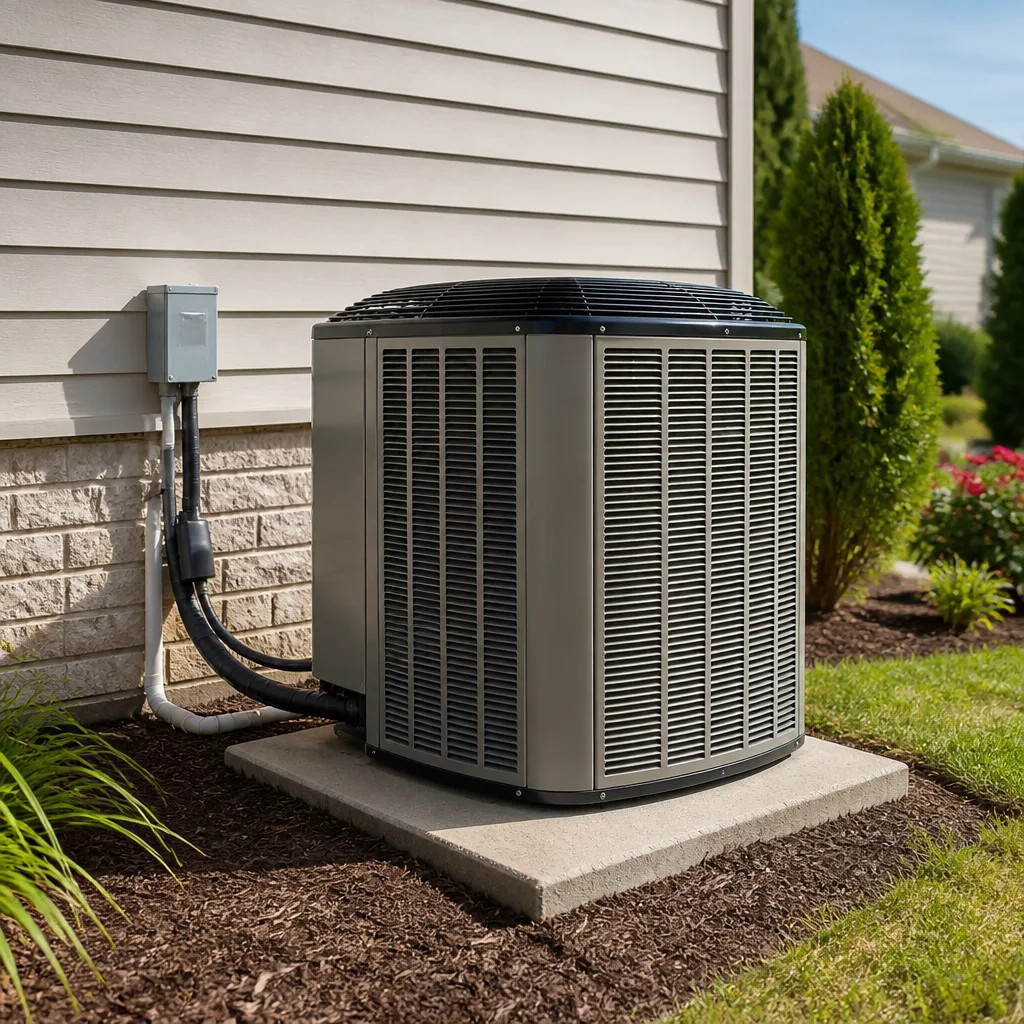 AC repair
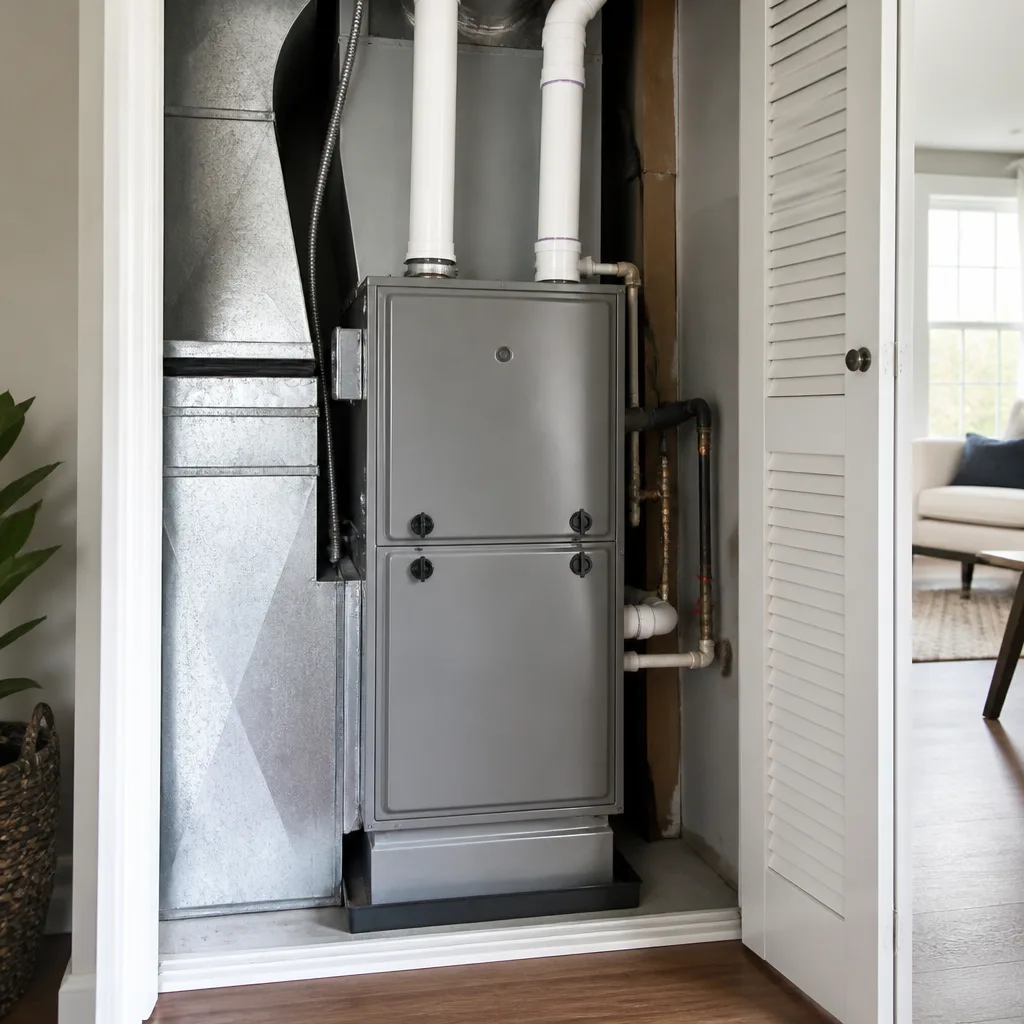 Furnace & heating
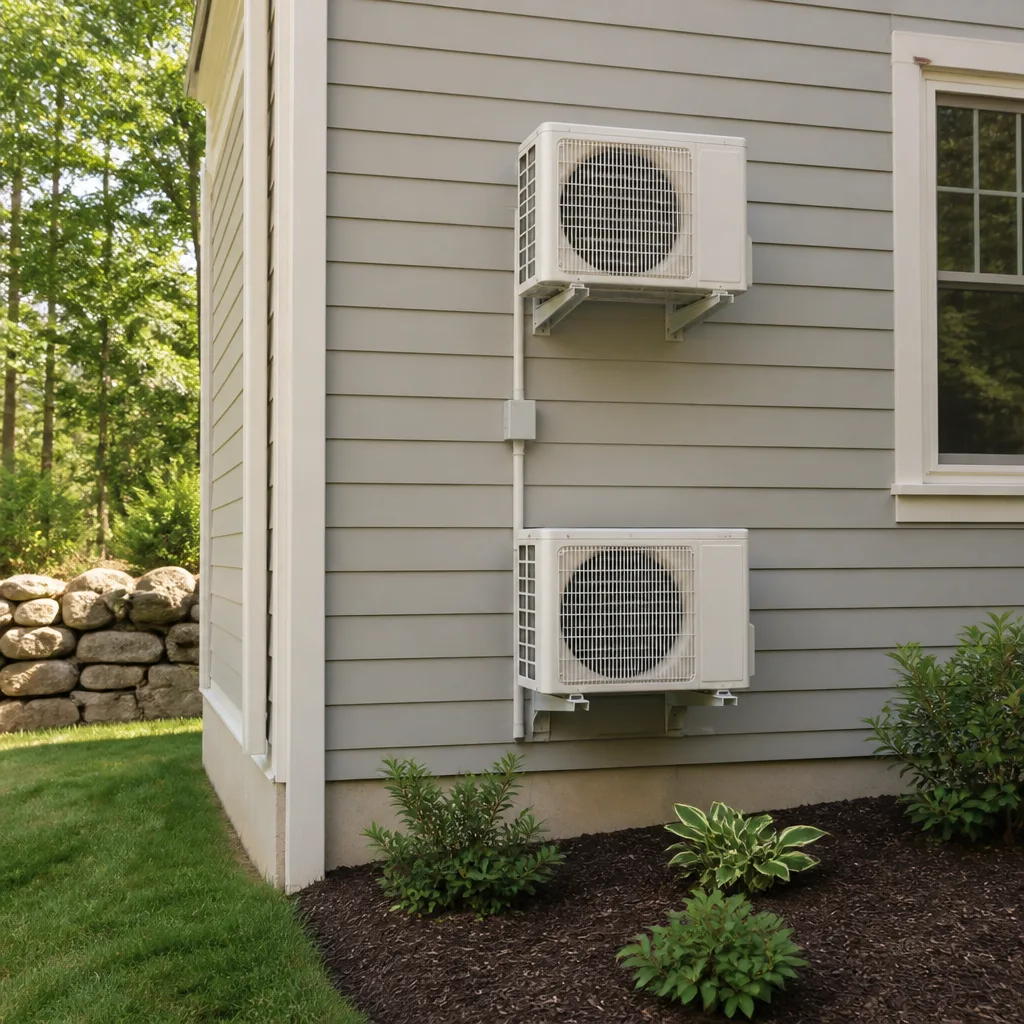 Ductless mini splits
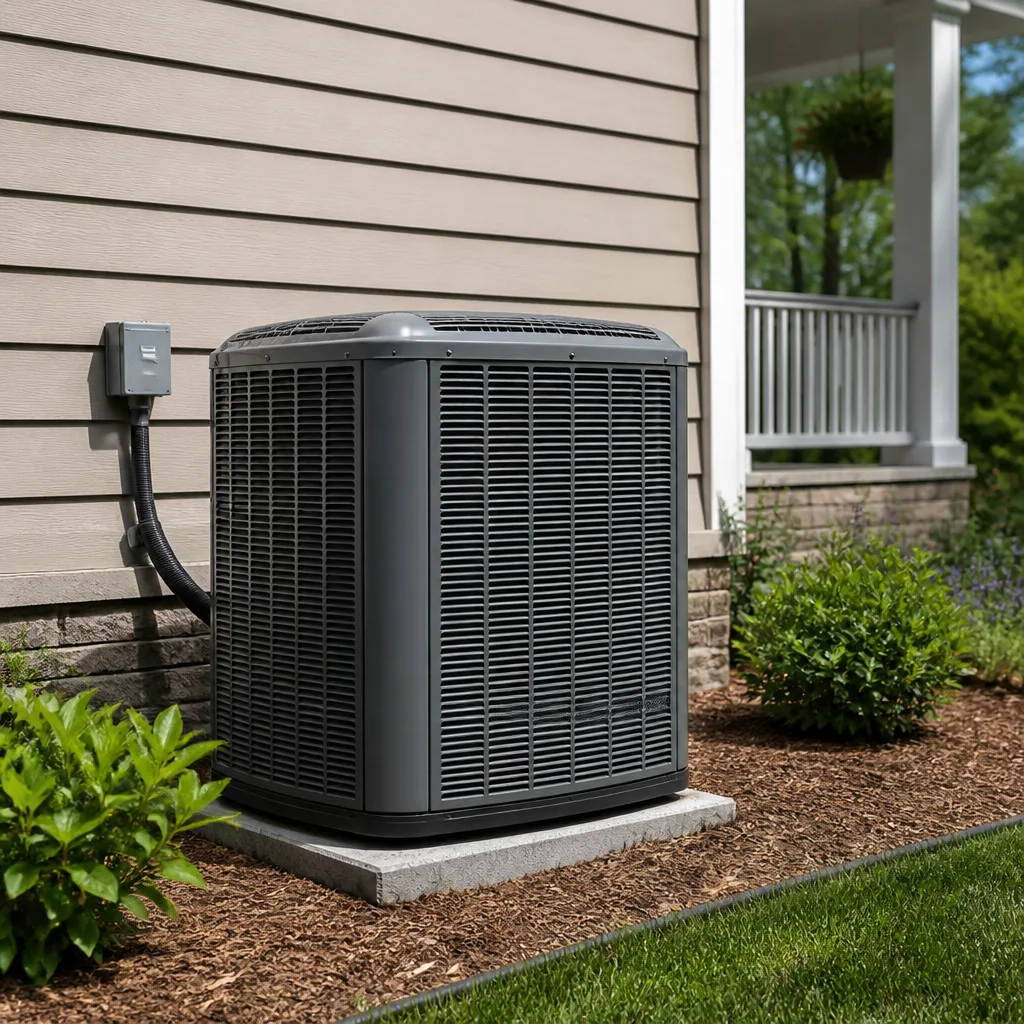 Trane
TraneSeasonal tune-up and full diagnostic on your Carrier, Trane, or Goodman system - readings shown to you before any repair is proposed
Diagnosis first, numbers second - you approve the repair price before a single part goes in.
Get your free estimateAC Repair Maintenance Checklist for Pasadena Homeowners
A clogged condensate drain line is the single most common AC service call in Pasadena from June through September, and it takes under three minutes to clear. Yet most annual tune-up checklists never tell you how to confirm the tech actually checked it. This guide closes that gap. You’ll learn what a proper Pasadena AC maintenance visit should include, the specific numbers a tech should record, and how to verify the work yourself with a $12 tool before you sign the invoice.
Quick Answer
An effective AC maintenance checklist for Pasadena homeowners focuses on verification, not vague task lists. You need the supply-return temperature split recorded (16 – 22°F), the condensate drain flushed and treated for Pasadena’s dry, dusty conditions, the condenser coil checked for ash-related fin damage, and the air filter’s MERV rating matched to your blower’s CFM capacity. If your tech can’t show you those numbers, the maintenance wasn’t complete.
Styles & brands we work with
Table of Contents
- The Temperature Split: Your System’s Report Card
- Condensate Drain Treatment in Pasadena’s Climate
- Condenser Coil Inspection and Ash Damage
- Air Filter MERV Ratings and Blower Motor Health
- Refrigerant Readings: Subcooling and Superheat
- Static Pressure and Airflow Verification
- The $12 Post-Maintenance Verification Test
The Temperature Split: Your System’s Report Card
Every AC maintenance visit should produce at least three numbers. The most important one is the temperature split, often called Delta T. This is the difference between the air temperature entering your return vent and the air leaving your supply register. In Pasadena, where summer days regularly push past 95°F and nights stay warm, a healthy system should show a split between 16°F and 22°F. We’ve seen systems in Altadena and South Pasadena run for years with splits outside that range, quietly wasting energy while the homeowner assumes everything is fine.
Here’s how to verify it yourself after the tech leaves:
- Run your AC for at least 15 minutes before measuring.
- Place a thermometer at a return vent (where air goes in). Note the number.
- Place the same thermometer at a supply register in the same room (where air comes out). Note the number.
- Subtract the supply temperature from the return temperature.
If the result is below 16°F, the system may be low on refrigerant, have a dirty evaporator coil, or suffer from duct leakage. If it’s above 22°F, airflow is restricted, often because of an overly dense air filter or collapsed ductwork. A tech who does not measure this split is guessing. At Dalton Heating & Air Pasadena, every maintenance visit includes this measurement in writing, because if it’s not written down, it didn’t happen. Our AC Repair in Pasadena service uses the same verification standard, and the repair quote includes the measured numbers that led to the diagnosis.
Condensate Drain Treatment in Pasadena’s Climate
Pasadena’s climate is different from the humid Southeast or the Gulf Coast. We get long dry stretches punctuated by sudden heat waves, and our air carries fine dust from the San Gabriel Mountains and periodic ash from wildfire events. That dust and ash ends up in your condensate drain line, mixing with the water your AC pulls from the air. The result is a slurry that hardens into a clog faster than most national checklists anticipate.
What this means for maintenance:
- Vinegar tabs are not enough here. Humid-climate advice often calls for monthly vinegar in the drain line. Vinegar prevents algae, but Pasadena’s clogs are more often mineral scale and fine sediment. You need a biocide flush or a condensate line treatment designed for high-sediment environments.
- The flush should be visible. A proper treatment pushes water or compressed air through the entire drain line, from the evaporator coil to the exit point outside. If the tech only pours a cup of something into the line, that’s incomplete.
- Check the drain pan and overflow sensor. In a Pasadena attic installation, a clogged drain can overflow and damage ceilings. The float switch (the sensor that shuts the system off when the pan fills) should be tested during every visit. Ask to see it happen.
We service systems throughout Pasadena and have pulled clogs out of drain lines in homes from Bungalow Heaven to Hastings Ranch that looked like drywall mud. The ones with regular biocide treatment rarely clog. The ones with vinegar tabs still clog, because vinegar evaporates in our dry heat before it can do the work. If your maintenance provider recommends the same drain treatment for Pasadena as they do for Miami, they’re not thinking about your system.
Condenser Coil Inspection and Ash Damage
The condenser coil sits outside, exposed to everything Pasadena throws at it. Most years, that’s dust, pollen, and debris from oak and sycamore trees. But after wildfire events in the San Gabriel range, fine ash settles on condenser coils across the city, and ash is not the same as ordinary dirt. It’s mildly alkaline and corrosive, and when it combines with moisture (including morning dew), it can pit the aluminum fins on your coil over time.
A proper maintenance visit in Pasadena should include a specific coil inspection, not just a rinse:
- Visual check for fin damage. Look at the coil under a light. Bent, folded, or crumbling fins are a problem. Ash damage shows up as progressive deterioration, not a clean bend from a hailstone or a weed whacker.
- Coil cleaning with the right agent. Standard coil cleaner works for dust. Ash requires a cleaner that addresses alkaline residue. Many techs in Pasadena carry a specialized coil cleaning solution for exactly this scenario.
- Fin combing. If fins are bent but not corroded, they should be straightened with a fin comb to restore airflow. Skipped fin repair means lost efficiency that shows up on your bill.
We’ve replaced condenser coils in Pasadena homes where the owner never noticed the damage because the unit was tucked behind a hedge or fence line. A qualified tech knows where to look. If your unit has been through an ash-heavy season, ask for the coil inspection specifically. The factory training our technicians carry covers Carrier, Trane, Lennox, Goodman, Rheem, York, Daikin, Bryant, and American Standard units, and coil condition is evaluated the same way across all of them.
Air Filter MERV Ratings and Blower Motor Health
Pasadena homeowners often upgrade to high-MERV filters thinking they’re doing their lungs and their AC a favor. A MERV 13 filter catches more particles, yes. But it also restricts airflow, and here’s the number that matters: every 0.1 inches of water column increase in static pressure reduces airflow by roughly 5 to 10 percent. A MERV 13 filter can add 0.3 to 0.5 inches of static pressure compared to a basic MERV 8. That means your blower motor works harder, moves less air, and can run hotter, shortening its life by years.
The question is not “what’s the highest MERV I can buy.” It’s “what MERV can my system handle without starving the blower.” Here’s the practical guide:
- MERV 8: The baseline for most residential systems. Catches dust, pollen, and mold spores. Lowest airflow restriction.
- MERV 11: A reasonable compromise. Catches finer particles, including some smoke from wildfire season. Adds moderate restriction, which most systems handle.
- MERV 13: The filter Pasadena homeowners often want during fire season. It catches smoke particles, but it can push an older or undersized system into airflow starvation. If your static pressure rises above 0.5 inches of water column total, the filter is too restrictive.
During maintenance, the tech should tell you the current static pressure reading and what filter rating the system can tolerate. If they recommend a MERV 13 without measuring static pressure, they’re guessing. In our experience in Pasadena, homes with 4-inch filter cabinets handle MERV 13 better than homes with 1-inch filter slots, because the larger surface area reduces resistance. If you have a 1-inch slot and want better filtration, a media cabinet upgrade might serve you better than a denser filter.
Refrigerant Readings: Subcooling and Superheat
Every homeowner should know two terms before their maintenance visit: subcooling and superheat. They sound technical, but they answer simple questions. Subcooling tells you whether the right amount of liquid refrigerant is reaching the expansion device. Superheat tells you whether the refrigerant is fully boiling off in the evaporator coil. Both numbers matter, and both should be recorded in writing.
Here’s what a proper reading looks like in Pasadena conditions:
- Subcooling: For most residential systems, 8°F to 14°F is the target range. Below 8°F often means an undercharge (a leak). Above 14°F often means an overcharge or a restriction.
- Superheat: For a fixed-orifice system, 10°F to 20°F is typical at steady state. For a TXV (thermal expansion valve) system, the superheat is set by the valve, and the tech verifies it stays stable.
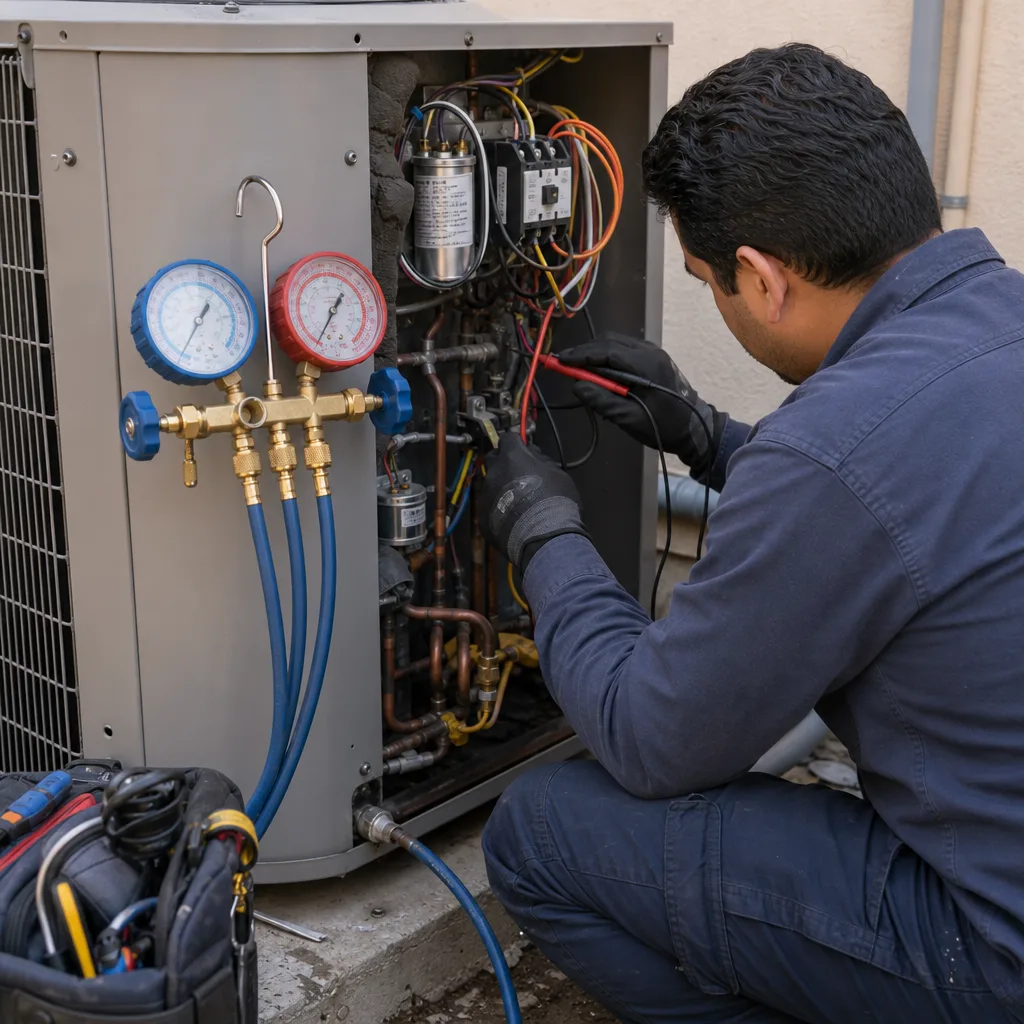
These numbers cannot be measured accurately without a proper gauge set and a thermometer on the refrigerant lines. If a tech does a “maintenance” visit without connecting gauges, that’s a problem. Refrigerant levels do not fix themselves, and a system that’s 15 percent low on charge can run for a season while burning extra electricity and risking compressor damage. The repair that follows an ignored low-charge condition often costs three to five times what a simple leak repair would have cost months earlier. For a deeper look at what we fix and how we quote, start at the Dalton Heating & Air Pasadena home service page.
Static Pressure and Airflow Verification
Static pressure is the resistance your ductwork and filter stack up against the blower. Think of it as blood pressure for your HVAC system. Too high, and the blower strains. Too low, and air is leaking somewhere. The target total external static pressure for most Pasadena homes is 0.5 inches of water column or less. Systems with high static pressure run loud, consume more power, and fail earlier.
What high static pressure feels like at home:
- Rooms at the end of a duct run (upstairs bedrooms, converted garages) stay warm while the thermostat area is comfortable.
- The system runs longer than it used to for the same set temperature.
- You hear a whistling or a rush of air at certain registers.
- Your filter gets dirtier faster than normal, because the system is pulling air through every available gap.
A complete maintenance check includes a static pressure reading taken with a manometer, a small handheld device that measures pressure differential. The tech should test before and after the filter change, because the filter itself often accounts for a large chunk of the resistance. If your static pressure is high, the fix might be as simple as dropping a MERV level, or as involved as duct sealing or a return air upgrade. Either way, you should know the number. We’ve worked in enough Pasadena homes with undersized returns to say this plainly: many “AC problems” are actually airflow problems, and airflow problems are diagnosed with a manometer, not a guess.
The $12 Post-Maintenance Verification Test
You do not need a technician’s license to verify whether your AC maintenance visit was effective. A $12 infrared thermometer from any hardware store gives you the tool you need. Here’s the test, step by step:
- Run the AC for 15 minutes after the tech leaves, with the thermostat set 5°F below room temperature.
- Point the infrared thermometer at the return grille (the one where air goes in). Record the reading.
- Point it at the supply register closest to the air handler (the one where cold air comes out). Record the reading.
- Subtract the supply from the return. The result should be between 16°F and 22°F.
If the split is outside that range, call the company back. The work is not done. A maintenance visit that leaves your system running with a 12°F split is a visit that failed. Our AC Repair services are backed by our 365-Day Done Right Promise, which covers exactly this scenario: if it’s not done right, we make it right. That’s not a marketing line; it’s the standard Marco Benitez enforces on every job, and it’s written into the guarantee you receive with your invoice.
You can also verify the condensate drain was flushed by walking outside to where the drain line exits. After a proper flush, the area should be damp, and the line should show signs of water movement. If it’s bone dry and the tech told you the drain was cleared, ask questions. The same applies to the coil: after cleaning, the condenser coil should look cleaner than it did before, not just wet.
What a Complete Pasadena Maintenance Visit Includes
Here is the full checklist, written for the homeowner sitting at the kitchen table while the tech works. Every item on this list is verifiable, not theoretical.
- Temperature split recorded: 16 – 22°F, in writing, on the invoice.
- Condensate drain flushed and treated: with a biocide or sediment treatment, not just vinegar.
- Float switch tested: the safety that shuts the system down if the drain clogs.
- Condenser coil inspected and cleaned: with attention to ash damage and bent fins.
- Air filter replaced or evaluated: with static pressure measured, and MERV rating matched to the system.
- Refrigerant subcooling and superheat measured: with gauges on the lines, not a visual check.
- Static pressure recorded: before and after the filter change.
- Electrical connections tightened: loose connections are a leading cause of blower motor failure.
- Thermostat calibration verified: the set temperature should match the room reading within 1°F.
- Capacitor tested: a weak capacitor is the most common hard-start cause in summer.
If your maintenance provider skips more than one of these items, they’re not doing maintenance. They’re doing a filter change with a show. A real maintenance visit at a Pasadena home takes 60 to 90 minutes. If the tech is at your house for 20 minutes, you already know the answer. For homeowners considering a new system rather than maintaining the current one, our Heat Pump Installation in Pasadena page explains the upgrade path and what it costs.
What happens when you call
- 1
A real person answersNo phone trees - you reach a local pro.
- 2
You get an upfront price rangeHonest numbers before anyone is dispatched.
- 3
A background-checked tech heads outLicensed & insured, dispatched right away.
- 4
You approve before work beginsNothing starts until you say go.
Pasadena-Specific Factors That Shorten AC Lifespan
Pasadena is not a generic climate. Three local factors show up in the service histories of systems we repair, and they explain why maintenance matters more here than in milder parts of the country.
First, our heat arrives in concentrated waves. A system that runs moderately for most of the summer suddenly runs 14 hours a day during a September heat event, when Santa Ana conditions push temperatures into the 100s. That’s when weak components fail. Preventive maintenance finds the weak capacitor or the undercharged system before the heat wave does.
Second, our air carries fine particulate matter from the San Gabriel foothills and from regional wildfire seasons. That particulate load clogs filters faster, coats coils, and accelerates wear on bearings. Homes in the Linda Vista and Annandale neighborhoods, closer to the chaparral, see more of this than homes near Old Pasadena, but everyone gets it during fire season.
Third, many Pasadena homes are older, with ductwork installed decades ago for systems that no longer exist. Duct leakage and undersized returns are common. A maintenance visit that ignores static pressure will never find these problems, and the homeowner keeps paying for lost air. If your home has a furnace paired with the AC, duct issues affect heating season too. Our Furnace Repair in Pasadena work often starts with the same airflow diagnosis.
See the difference
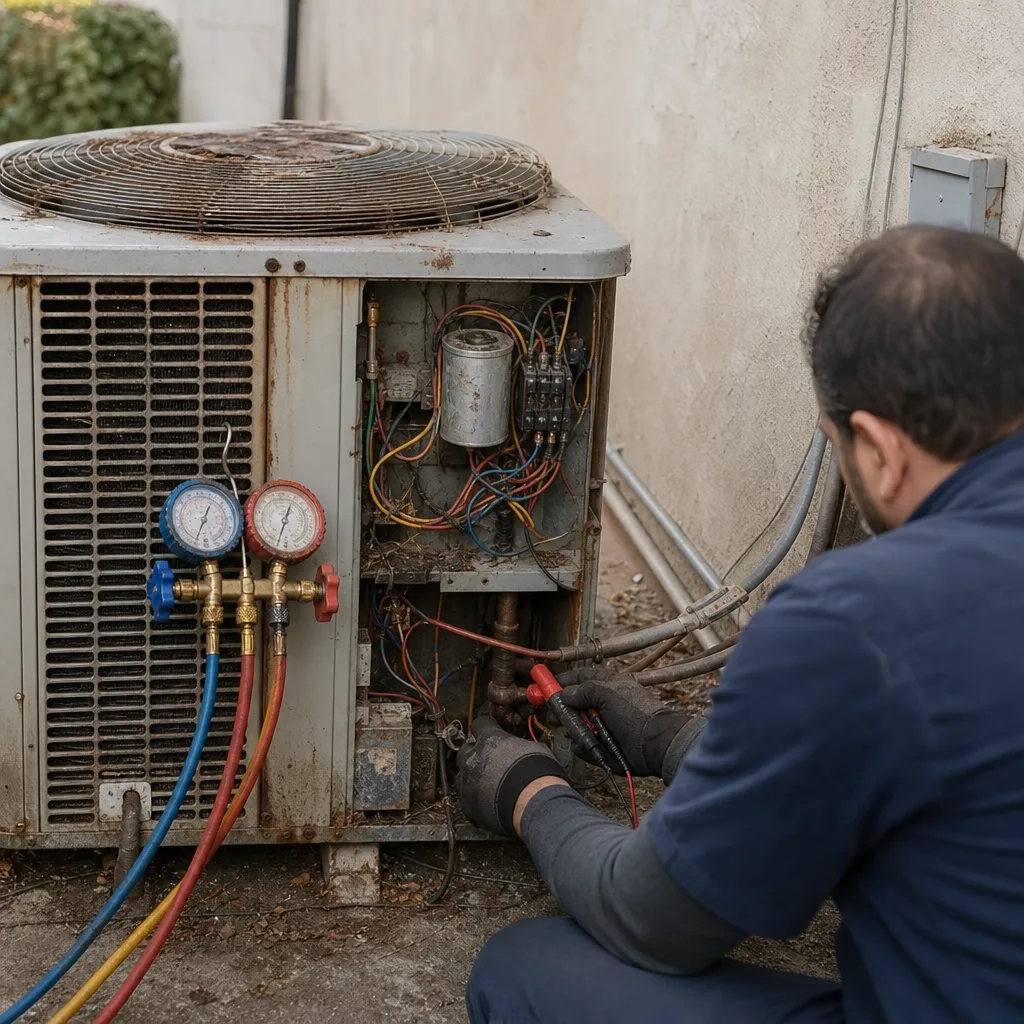 Before
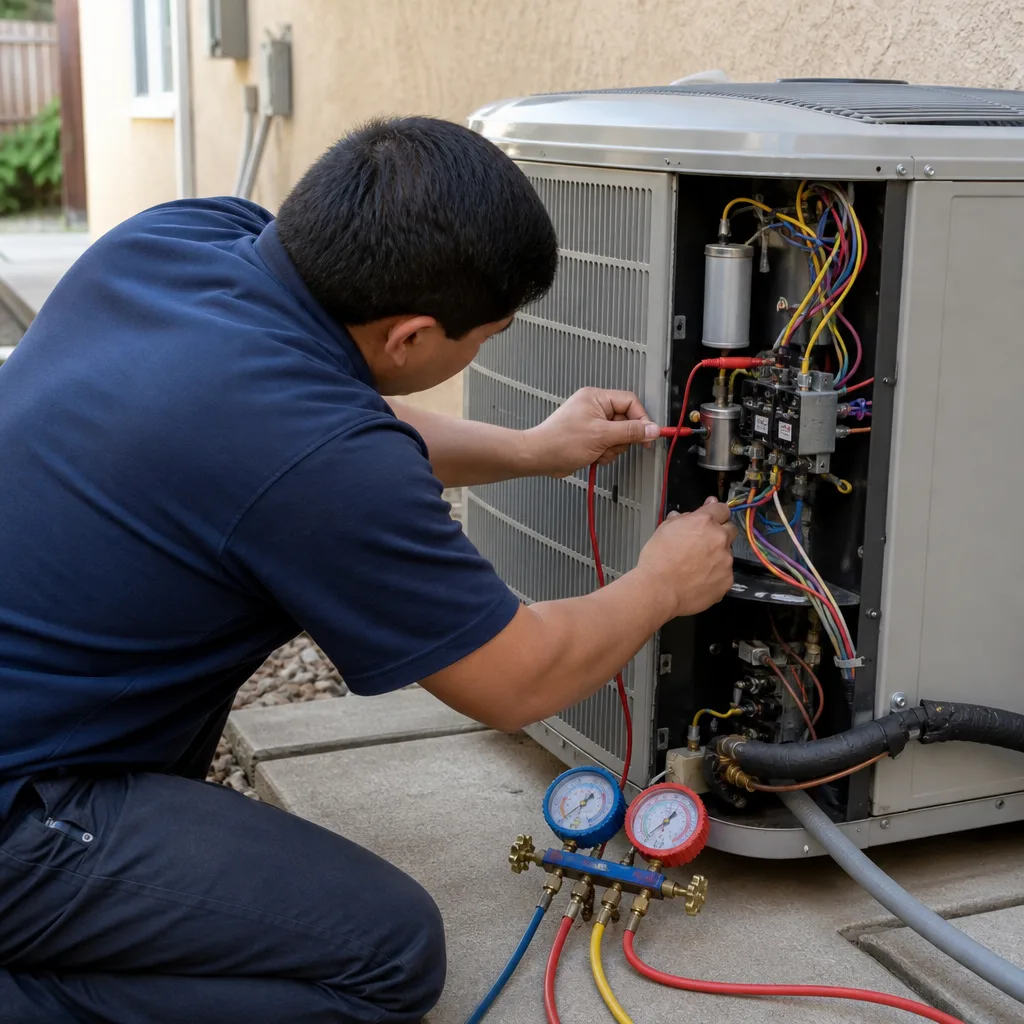 After
After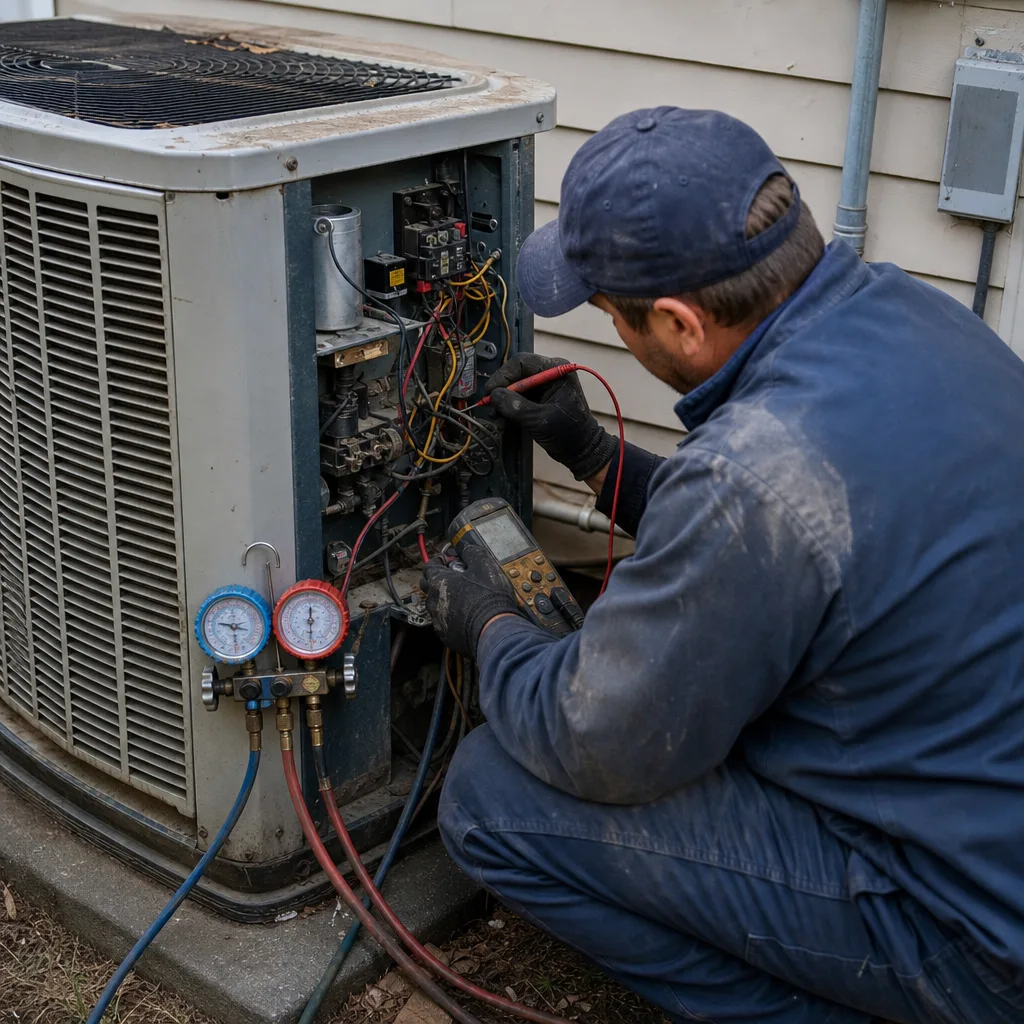 Before
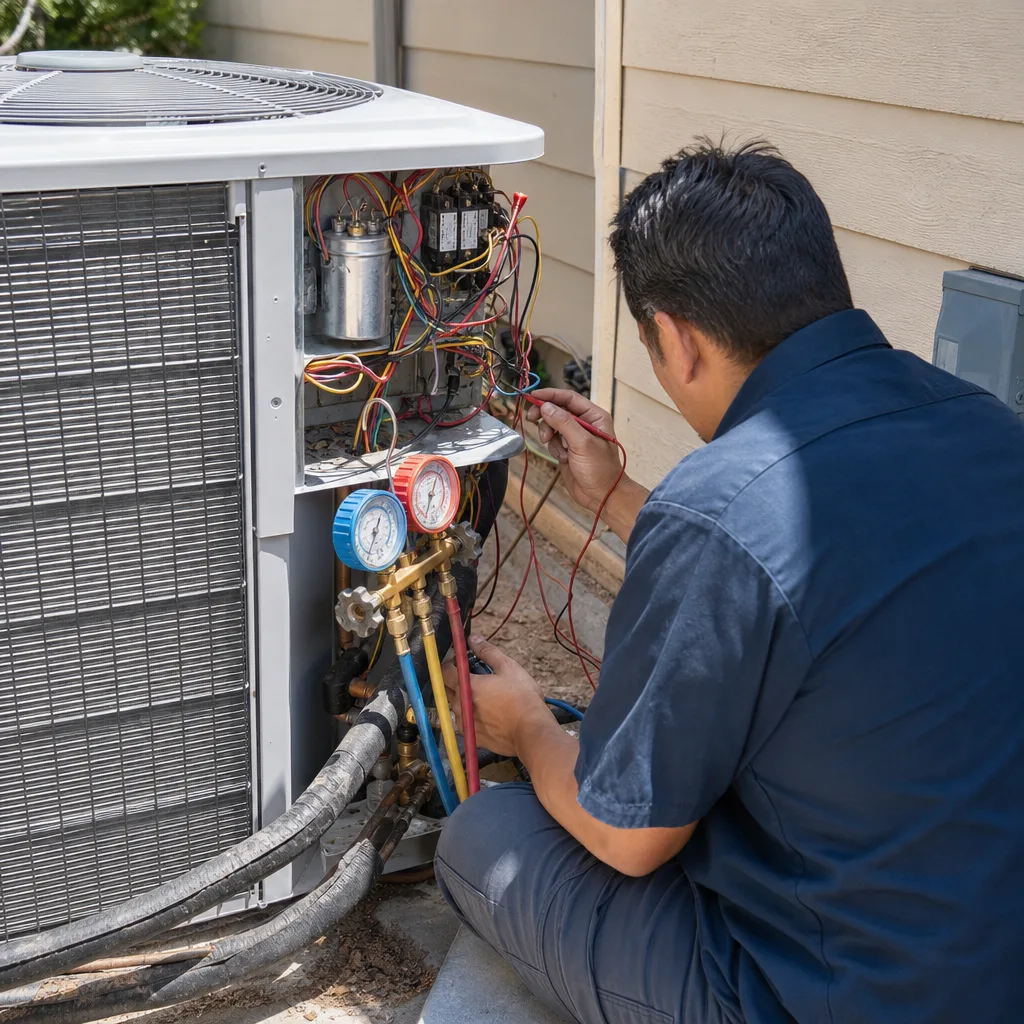 After
After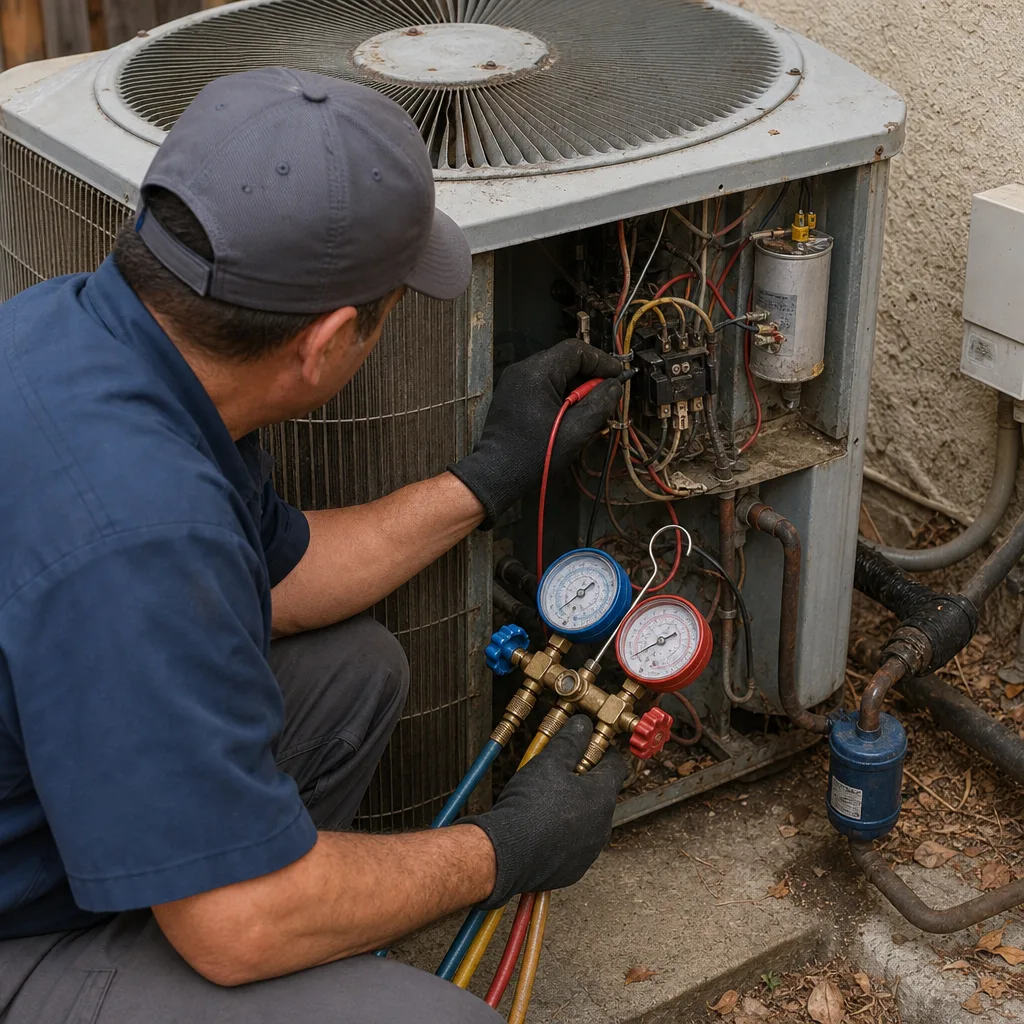 Before
 After
AfterCommon Mistakes to Avoid
- Paying for maintenance without receiving numbers. A tune-up that doesn’t record temperature split, static pressure, and refrigerant readings is not a tune-up. It’s a filter change at a premium price. Ask for the numbers in writing.
- Trusting vinegar as a drain treatment in Pasadena’s dry climate. Vinegar evaporates in our heat and does nothing for sediment clogs. Use a biocide or enzyme treatment designed for mineral and dust buildup.
- Installing the highest-MERV filter without measuring static pressure. You can starve your blower and shorten its life by years while thinking you’re protecting your air quality. Measure first, upgrade second.
- Skipping maintenance because the AC is “working fine.” In Pasadena, a system running fine in May can fail in September when the heat wave hits and the weak capacitor finally quits. Maintenance is cheaper in spring than emergency repair in summer.
- Ignoring the outdoor unit’s location risk. Units boxed in by shrubs, fences, or debris accumulate dirt and ash faster. Clear at least 2 feet of space around the condenser and check it monthly during fire season.
- Assuming a 20-minute maintenance visit is normal. A proper Pasadena AC maintenance takes 60 to 90 minutes. If the tech is gone in half that time, the checklist was skipped.
When to Call a Professional
Call a professional when your temperature split is outside the 16 – 22°F range, when the system is short-cycling, when you hear grinding or squealing from the outdoor unit, when the condensate line has not been treated in over a year, or when your energy bill spikes without a change in usage. These are not DIY vs Professional HVAC territory. Refrigerant handling requires certification, and electrical work on a condenser carries risk. If your system is showing any of these signs, get a diagnosis before the problem compounds. Dalton Heating & Air Pasadena offers free estimates in Pasadena. Call (626) 657-5344 and a real person answers, 24/7, not a voicemail queue.
Frequently Asked Questions
Once a year, ideally in spring before the summer heat arrives. If your system runs through wildfire season or is older than 10 years, twice a year is reasonable. Pasadena’s heat waves come fast, and a system that survived last summer may not survive the next one without a maintenance check.
Most Pasadena homeowners pay between $89 and $189 for a standard maintenance visit, depending on the company and what’s included. The price should be in writing before the work starts. If a company quotes one price over the phone and a higher one at the door, that’s a red flag. Dalton Heating & Air Pasadena follows The Garrison Standard on every job: written price before any work begins, no exceptions.
For most homes, a MERV 11 filter during fire season offers reasonable smoke particle capture without starving the blower motor. MERV 13 is appropriate only if your system’s static pressure stays at or below 0.5 inches of water column. If you want MERV 13 performance and your system can’t handle the restriction, upgrade to a 4-inch media cabinet instead.
You can change the filter, clear debris from the outdoor unit, and run the infrared thermometer test after a professional visit. You should not attempt refrigerant work, electrical repairs, or condensate line modifications. Those jobs require training and, for refrigerant, federal certification. A homeowner in Pasadena can verify work; they cannot perform it safely.
Ask for the numbers: temperature split, static pressure, subcooling, and superheat. A legitimate maintenance visit produces these readings and puts them on the invoice. Then run the $12 infrared thermometer test yourself. If the split is outside 16 – 22°F after the visit, the maintenance was ineffective. With Dalton Heating & Air Pasadena, if it’s not done right, the 365-Day Done Right Promise applies and we return at no charge.
Pasadena systems often struggle during heat waves because the condenser coil is dirty, the refrigerant charge is low, or the return air is undersized. A system that works at 90°F outside may fail to hold temperature at 105°F. The only way to know which problem you have is to measure static pressure and refrigerant readings. Guessing is expensive.
The Bottom Line
AC maintenance in Pasadena is only as good as the numbers it produces. A real maintenance visit records the temperature split, the static pressure, and the refrigerant readings, flushes the condensate drain with the right treatment for our dry, dusty climate, and inspects the condenser coil for ash damage. If the tech can’t show you those numbers, the visit didn’t happen. Run the infrared thermometer test, keep the MERV rating matched to your blower, and schedule maintenance before the heat wave arrives. For more guides & resources, the single best protection for your Pasadena AC is a maintenance visit you can verify.
Written by Marco Benitez, Owner at Dalton Heating & Air Pasadena, serving Pasadena since 2003.