
Last updated October 16, 2026
 AC repair
 Furnace & heating
 Ductless mini splits
 Trane
TraneSeasonal tune-up and full diagnostic on your Carrier, Trane, or Goodman system - readings shown to you before any repair is proposed
Diagnosis first, numbers second - you approve the repair price before a single part goes in.
Get your free estimateThe Complete Guide to HVAC in Pasadena
Pasadena recorded 13 days above 100°F in 2023, yet the city sits only 12 miles from the Pacific. That combination breaks the simple “hot climate” assumptions most national HVAC sizing guides are built on. A system spec’d for inland San Gabriel Valley heat will short-cycle in a Pasadena Craftsman bungalow that never fully loses the marine layer’s influence. This guide explains what that means for your equipment, your ducts, your utility bill, and the repair calls you’ll actually face here. We’re writing this from the perspective of a Pasadena HVAC contractor who works on homes built between 1910 and 2025, and we’ll be specific about what we see in each.
Styles & brands we work with
Quick Answer
HVAC in Pasadena means sizing equipment for a coastal-adjacent microclimate that still produces triple-digit summer days, and installing it in housing stock that ranges from 1920s Craftsman bungalows with original gravity-furnace chases to new ADU-standard construction. The biggest mistakes we see are oversized condensing units, undersized return-air paths in pre-1960 homes, and skipped low-ambient controls for heat pumps. Most Pasadena HVAC repairs run $150 to $450, full system replacements run $9,000 to $18,000 before rebates, and the work should always be priced in writing before it starts.
Table of Contents
- Pasadena’s Climate: Why “L.A. Rules” Don’t Apply Here
- What Pasadena’s Housing Stock Does to HVAC Performance
- Santa Ana Winds and Your Evaporator Coil: What Actually Happens
- Manual J Sizing in Pasadena: Why Oversizing Is the Default Mistake
- How to Read a California Title 24 Compliance Certificate
- Pasadena Utility Rebates: SCE and SoCalGas Programs That Are Active Now
- What HVAC Work Costs in Pasadena: Real Numbers
- Common Mistakes to Avoid
- When to Call a Professional
- Frequently Asked Questions
- The Bottom Line
Pasadena’s Climate: Why “L.A. Rules” Don’t Apply Here
Pasadena sits in ASHRAE climate zone 3B, dry with significant coastal influence, but anyone who has lived here more than one summer knows that zone classification undersells the swing. July and August routinely push past 100°F. October brings Santa Ana events that spike temperatures into the 90s while dropping relative humidity below 10 percent. Then June arrives the following year with weeks of 65°F mornings and a marine layer that burns off by noon but keeps the overnight low 20 degrees below the daytime peak.
That temperature swing, often 35 to 40 degrees within a single 24-hour period, is what separates Pasadena from inland cities like Pasadena’s neighbors to the east. A system designed for a flat desert profile, hot days and hot nights, gets relatively little runtime at night in Pasadena. That changes the equipment calculus. Variable-speed and two-stage equipment that can run long and low during moderate evenings performs fundamentally differently in Pasadena than single-stage equipment that blasts on and off.
Here’s what the microclimate means in practical terms for your system:
- Heat pump viability is higher here than in the true desert. Pasadena’s winter lows rarely dip below 40°F, which is squarely within the efficient operating range of a modern cold-climate heat pump. You don’t need the backup strip heat that a Palmdale install would demand.
- Nighttime humidity recovery matters. The marine layer influence means overnight relative humidity climbs back up even in August. Older fixed-speed systems short-cycle through this period, leaving latent heat unremoved and the house feeling clammy at 72°F.
- Runtime profiles favor inverter equipment. Because Pasadena gets so many shoulder-season hours, September and October evenings and May mornings, an inverter-driven compressor can modulate down to 30 or 40 percent capacity. A single-stage system cannot. The energy math on that gap is real.
If someone sold you a system with a one-size-fits-all California heat profile, they probably oversized the condenser. We’ll return to that in the sizing section. First, the house itself.
What Pasadena’s Housing Stock Does to HVAC Performance
We work on homes in Pasadena built in five distinct eras, and each era creates a different set of limitations for forced-air HVAC:
- Pre-1930 Craftsman and Spanish Revival homes in neighborhoods like Bungalow Heaven and Madison Heights. These were built for gravity furnaces, not forced air. Many still have their original floor registers and no return-air pathway to speak of. A central return in the hallway is common, but the doors are solid wood and undercut by a quarter inch. When the bedroom doors close, the return starves.
- Post-war tract houses, 1945 to 1965, concentrated in Linda Vista and upper Altadena before the city line blurs. These were built fast, often with undersized duct trunks and a single return in the living room. The ductwork is now 60 to 80 years old and frequently leaks at the collars.
- 1960s and 1970s ranch homes, common in Hastings Ranch and the area around Victory Park. Better duct layouts, but the original equipment is long gone and many have had two or three partial-system replacements by different contractors. Mixed-age components are the norm here.
- 1980s to 2000s production builds. These typically have adequate returns, but the duct sealing and insulation quality varies wildly depending on the original tract builder.
- 2010s to present custom and ADU-adjacent builds. Modern code compliance usually means correct duct sizing, but we still find commissioning errors, improperly set airflow, and mislabeled breakers.
The pre-1960 return-air issue deserves a paragraph of its own because it is the single biggest hidden problem in Pasadena HVAC. A properly sized new system, say a 3-ton heat pump matched to a Manual J load calculation, still needs to move roughly 1,200 cubic feet of air per minute. If the return-air chase is an old 12-by-12-inch wall cavity with a 14-inch grille, it can’t deliver that. The result is a system that freezes the coil in summer, trips the high-limit switch in winter, and makes a noisy, rushing-air sound at every register. Homeowners replace motors and coils, and the failure comes back because the underlying airflow problem was never addressed. Before we quote any replacement on a pre-1960 Pasadena home, we check the return. If it is undersized, fixing that is part of the job, not an add-on we mention after the fact.
This is also the reason our AC repair service in Pasadena includes an airflow assessment rather than just a part swap. The part failed for a reason.
Santa Ana Winds and Your Evaporator Coil: What Actually Happens
Santa Ana wind events do not directly damage your outdoor condenser, though they will coat it in dust and dry leaf debris. The real effect is on the indoor evaporator coil, and it is counterintuitive: low outdoor humidity triggers coil freeze-ups, and coil freeze-ups lead to compressor damage if the system keeps running.
Here is the mechanism. Santa Ana conditions push outdoor dew points down into the 30s or lower. Your air conditioner is designed to remove sensible heat and a certain amount of latent heat (moisture). When incoming air is bone-dry, the evaporator coil has less latent work to do, which means less heat is absorbed from the air. But the compressor keeps pumping refrigerant at the same rate. The coil temperature drops below 32°F. Any moisture that does reach the coil, from cooking, showering, or the people in the house, freezes onto it. In severe cases, the coil becomes a block of ice and airflow drops to near zero. Superheated vapor stops returning to the compressor in sufficient volume, and liquid refrigerant can slug back. That is how a Santa Ana week kills a compressor.
What to check before and after a Santa Ana event in Pasadena:
- Before the winds peak: Check the outdoor condenser for direct exposure. If it faces an open canyon or a neighbor’s construction site, dust loading will be worse. Make sure the condenser coil is clean going into the event, not caked with spring pollen.
- During the dry stretch: Run the system on “auto” rather than “on” for the fan. The continuous fan setting blows warm air across a frozen coil and masks the problem until the compressor is damaged. Auto lets the system cycle off and defrost naturally.
- After the winds pass: Check the condensate line for flow. Santa Ana dust settles on the coil, mixes with the small amount of condensate, and produces a clay-like sludge that clogs the drain line within days. A wet floor under the indoor unit is the tell. The fix is a drain line flush and a coil rinse, both of which we do as a standard part of our furnace repair work in Pasadena when we are already on site for a seasonal check.
- Check the filter. Santa Ana airborne dust is fine enough to load a filter in a single week. A loaded filter restricts airflow, which drives down coil temperature, which accelerates freeze-up. It’s a feedback loop.
If you notice the system running constantly during a Santa Ana event but not cooling the house, shut it off at the thermostat and let the coil thaw for several hours before calling for service. Running a frozen system is how a $50 repair becomes a $2,000 compressor replacement.
Manual J Sizing in Pasadena: Why Oversizing Is the Default Mistake
Manual J is the ACCA standard load calculation method that determines what size heating and cooling system a house actually needs. It accounts for square footage, insulation levels, window orientation, air infiltration, ceiling height, and the design-day temperature for the specific location. In Pasadena, the 1 percent summer design temperature is around 92°F, not the 105°F used for Palm Springs or the 100°F used for many inland valleys.
The disconnect is that many contractors, especially those quoting over the phone or from a satellite photo, still use a rough rule of thumb: one ton per 500 square feet. For a 2,000-square-foot Pasadena bungalow, that rule produces a 4-ton system. A proper Manual J on the same house, accounting for the coastal-modified design day and the tree canopy that shades most of Bungalow Heaven, comes back at 2.5 or 3 tons. The 4-ton system is oversized by 30 percent or more.
Oversized systems fail in predictable ways in Pasadena’s specific climate:
- Short cycling. The oversized condenser satisfies the thermostat in eight minutes. The compressor runs three to four times more cycles per day than it is designed for. Compressor life drops from 15 to 18 years to 8 to 10 years. We see this failure pattern constantly in Pasadena homes built before 1980.
- Poor humidity control in the shoulder season. In May, June, and October, when Pasadena temperatures are moderate but humidity is up, the oversized system blasts cold air for seven minutes and shuts off before the coil has had time to condense moisture. The house feels cold and damp at the same time, and homeowners respond by setting the thermostat lower, which makes the problem worse.
- Duct noise. A system moving more air than the ducts can handle is loud. The rushing-air sound at the register is not normal operation; it is the sound of an airflow mismatch.
The correction is a real load calculation performed at the house, not over the phone. Before we install a heat pump in Pasadena, we measure the rooms, window sizes, insulation values, and return-air capacity. If the Manual J says 3 tons and the existing duct is sized for 2.5, we either modify the ductwork or step the equipment down to match. A system can only perform as well as its least capable component.
How to Read a California Title 24 Compliance Certificate
Every new HVAC installation in Pasadena must comply with California Title 24, Part 6, the state’s energy code. When a system is installed with a permit, the installing contractor is required to produce a compliance certificate showing the equipment meets the minimum efficiency standards and that certain mandatory measures were completed. Most homeowners file this certificate away and never look at it. That is a mistake, because the certificate tells you what your system was supposed to deliver, and it gives you a baseline for future repairs and replacement decisions.
Here is what to look for on the document itself:
- CF-1R or CF-6R form designation. The CF-1R is the pre-installation certificate completed before work begins. The CF-6R is the installation certificate completed after the work is done. You should have both.
- Equipment efficiency ratings. The certificate lists SEER2 and, for heat pumps, HSPF2 values. The current California minimum is 14.3 SEER2 for split-system air conditioners. If your certificate lists 14.3 SEER2, the contractor installed the cheapest compliant equipment. If it lists 16 to 18 SEER2, you have mid-efficiency equipment that may qualify for the SCE rebates we will cover below.
- Refrigerant charge verification. The CF-6R requires the installer to verify the refrigerant charge, measured by superheat or subcooling depending on the metering device. If this section is blank, the installer skipped a required verification step. The system may work, but it was not commissioned properly.
- Airflow verification. Look for the measured airflow number, usually in cubic feet per minute. For a 3-ton system, that number should be around 1,050 to 1,200 CFM. If it is materially lower, your ductwork is the bottleneck.
- HERS verification stamp. Some Title 24 measures require a third-party HERS rater to verify the installation. If your certificate shows a HERS registry number and a rater’s signature, the duct sealing and airflow testing were independently confirmed. This is not required for every installation, but it is a useful signal of a thorough job.
If your certificate does not match the equipment that is actually installed, or if the installer cannot produce one, that is a licensing and permit problem, not just a paperwork nuisance. It also means the equipment may not be eligible for certain rebates and may complicate a future home sale. In our experience, most Pasadena homeowners have never had the certificate explained to them. That is a training gap in our industry, and it costs people money when they buy a system without understanding what the quoted efficiency numbers actually mean.
Pasadena Utility Rebates: SCE and SoCalGas Programs That Are Active Now
Pasadena is served by two utilities for energy: Southern California Edison for electricity and SoCalGas for natural gas. Both run equipment rebate programs that change on an annual cycle. Knowing which program applies to your project before you commit to an equipment order can shift the math by $500 to $2,500 or more.
Here are the active programs that matter for Pasadena homeowners as of this writing:
SCE Residential HVAC Rebates
- ENERGY STAR Certified Room Air Conditioner Rebate. Replacing a portable or window unit with an ENERGY STAR model qualifies for a per-unit rebate. This matters in Pasadena because many pre-1930 homes have no central air at all and rely on room units.
- Central AC Heat Pump Rebate. SCE’s qualifying products list changes by model year, but the general rule is that a minimum-efficiency ducted heat pump qualifies for a base rebate, and higher-efficiency models with inverter-driven compressors qualify for a higher tier. A 15.2 SEER2 heat pump may qualify for a lower amount than an 18.1 SEER2 model.
- Quality Installation Rebate. In some SCE program cycles, an additional rebate is available when a contractor certifies that the installation was performed according to ACCA quality installation standards, which means a Manual J load calculation, verified airflow, and verified refrigerant charge. This is worth asking about specifically because most contractors do not complete the paperwork.
SoCalGas Residential Rebates
- High-Efficiency Furnace Rebate. SoCalGas offers a rebate for furnaces with a 95 percent or higher AFUE rating. The current minimum federal standard for non-weatherized furnaces is 80 percent AFUE, so this rebate targets the efficiency tier above that baseline.
- Smart Thermostat Rebate. A qualifying smart thermostat, typically one with adaptive learning and occupancy sensing, qualifies for a rebate when paired with a gas furnace. This applies broadly to Pasadena homes with central heat.
- Water Heating and Combination System Rebates. These extend beyond HVAC into water heating, but they matter when a home is replacing a boiler-and-tank setup with a combination system that serves both domestic hot water and space heating. We see this configuration in older Pasadena apartment buildings and some larger homes.
The rebate landscape shifts on a fiscal-year cycle, and the qualifying equipment lists are updated regularly. Before you sign a replacement contract, ask your contractor to show you the current program terms and confirm that the specific model numbers you are buying appear on the qualifying product list. A written quote does not help you if the rebate evaporates because the equipment is one model year too old.
What HVAC Work Costs in Pasadena: Real Numbers
We quote work in Pasadena every week, and these are the ranges we actually see for the most common jobs. They are not national averages from a home-services marketplace. They reflect Pasadena’s mix of old and new housing stock, the cost of permits and Title 24 compliance, and the labor market for licensed technicians in the San Gabriel Valley.
| Job | Typical Pasadena Range | What Moves the Price |
|---|---|---|
| Diagnostic service call | $79 to $129 | Flat-rate diagnostic, often waived if you proceed with repair |
| AC or furnace repair | $150 to $450 | Capacitor on the low end, blower motor or control board on the high end |
| Refrigerant recharge (with leak repair) | $400 to $900 | Type of refrigerant (R-410A vs. legacy R-22), leak location, pound count |
| Condensate line flush and clean | $100 to $200 | Access difficulty, line length, whether a safety float switch is needed |
| Duct sealing (partial) | $600 to $1,400 | Accessible attic vs. crawlspace, number of uncovered joints |
| Full AC replacement (3-ton, 14.3 SEER2) | $9,000 to $12,500 | Duct modifications, electrical, permit, Title 24 |
| Full heat pump replacement (3-ton, 17 SEER2 inverter) | $13,000 to $18,000 | Higher equipment cost, possible electrical panel upgrade |
| Furnace replacement (80% AFUE, 80,000 BTU) | $4,500 to $7,000 | Flue condition, gas line, air handler compatibility |
| Furnace replacement (96% AFUE, condensing) | $7,500 to $11,000 | Condensate drainage, PVC venting, SoCalGas rebate eligibility |
These ranges assume a permitted installation with a Title 24 certificate, the standard in Pasadena. Unpermitted cash jobs run lower, but the savings go away the first time a claim is denied or the work fails inspection at resale. We write the price before any work starts, on every job, and the repair is guaranteed in writing for a full year. If the work fails inside that window, we return at no charge. That is not a promotional offer. It is the Garrison Standard, the operating rule we have worked under since 2003, and it applies to every call in Pasadena.
For a more detailed breakdown on the AC side specifically, see our full AC repair cost guide for Pasadena.
You can visit the Dalton Heating & Air Pasadena home to see current service details and availability.
Common Mistakes to Avoid
- Accepting a quote over the phone without a home visit. A load calculation cannot be done from a satellite photo. Any contractor who quotes a full replacement without setting foot in the house is guessing, and in Pasadena’s mixed housing stock, guesses are wrong more often than not.
- Replacing the outdoor condenser and leaving 40-year-old ductwork. The condenser is only half the system. If the ducts leak 25 percent of the conditioned air into the attic, you paid for efficiency you will never feel.
- Skipping the return-air assessment on a pre-1960 home. The single highest-frequency preventable failure in Bungalow Heaven and Madison Heights is a new system starving for air through an undersized return. The fix is part of the install, not a luxury upgrade.
- Running the AC during a Santa Ana event when the coil is frozen. If the system is running but not cooling, shut it off. Thawing takes three to six hours. A compressor replacement takes your summer.
- Choosing equipment by brand name alone. We service nine major brands including Carrier, Trane, Lennox, American Standard, Goodman, Rheem, York, Daikin, and Bryant. The brand matters less than the installation quality. A properly commissioned Goodman outperforms a sloppily installed Trane every time. The reverse is also true.
- Ignoring the Title 24 certificate after the job is done. That certificate is the only evidence you have that the system was commissioned to the efficiency you paid for. Read it. Ask questions. If the contractor cannot produce it, that is a problem.
- Waiting until the first 100°F day to schedule maintenance. The first heat wave of the season is when Pasadena HVAC companies are booked solid and emergency rates apply. A spring check in April costs less and finds problems before they strand you in July.
When to Call a Professional
You should call a professional any time you smell gas, hear screeching from the blower compartment, see ice on the indoor coil or outdoor lines, or notice a drain pan filling with water. Those are not normal-operation symptoms; they are failure signals that get more expensive the longer they are ignored. You should also call before any replacement, even if you plan to do some of the prep work yourself, because the permitting and Title 24 compliance requirements in Pasadena are not optional and a diy condenser swap will not pass inspection. Dalton Heating & Air Pasadena offers free estimates in Pasadena, call (626) 657-5344, and the price you receive is in writing before any work starts. The same applies to our furnace repair services in Pasadena: the price is written, the guarantee is for a full year, and the return visit is free if the repair fails.
Frequently Asked Questions
A full system replacement in Pasadena typically runs $9,000 to $18,000 depending on equipment efficiency, home size, and whether ductwork modifications are needed. A 3-ton, 14.3 SEER2 AC replacement with a new furnace is at the lower end; a 3-ton inverter heat pump at 17 SEER2 with duct sealing and a panel upgrade is at the upper end. Call (626) 657-5344 for an exact written quote. Estimates are free.
Santa Ana winds drop outdoor humidity below 10 percent, which removes the latent heat load from your evaporator coil and drives the coil temperature below freezing. The small amount of indoor moisture then freezes on the coil, blocking airflow. The short-term fix is to shut the system off and let it thaw; the long-term fix is proper airflow verification and, in some cases, a low-ambient control. If this happens repeatedly, call (626) 657-5344 for a diagnosis.
For most Pasadena homes, a heat pump is the better choice because winter lows rarely drop below 40°F, which is well within the efficient range of modern cold-climate heat pumps. The exception is a home with a very old electrical panel that cannot accommodate the added load, where a high-efficiency gas furnace paired with a high-SEER AC may be more practical. We quote both configurations so the decision is based on your actual house, not a sales script. See our heat pump installation guide for Pasadena for more detail.
Yes, Southern California Edison and SoCalGas both offer equipment rebates that apply to Pasadena homes, including central AC heat pump rebates, high-efficiency gas furnace rebates, and smart thermostat rebates. The qualifying equipment lists change annually, so the specific model you are considering needs to be checked against the current program terms before you order. We verify rebate eligibility as part of our written quote process.
A standard full-system replacement in Pasadena takes one to two days for the equipment swap, with an additional day if duct modifications or panel upgrades are required. Permitting through the City of Pasadena typically adds one to two weeks to the schedule, and the Title 24 compliance certificate is completed at the end of the job. We set a written install date and stick to it; the full-year guarantee on every repair is documented before we leave.
We service nine major residential HVAC brands: Carrier, Trane, Lennox, Goodman, Rheem, York, Daikin, Bryant, and American Standard. That covers nearly every system installed in Pasadena in the last 25 years. Our technicians are factory-trained on all nine platforms, which means a diagnostic on a Carrier is not a learning experience for the tech.
The Bottom Line
Pasadena is not a generic Southern California HVAC market. The climate creates unusual shoulder-season demands and Santa Ana-specific failure patterns. The housing stock, much of it built before forced-air HVAC existed, imposes airflow and ductwork constraints that no equipment swap can fix. The utility rebate landscape adds real money to the decision if it is checked before the order is placed. And the Title 24 certificate is the only paper trail that proves the system you paid for is the system you got. If you take one thing from this guide: get the price in writing before any work starts, and get the return-air path checked before any replacement is quoted. Everything else follows from that.
Written by Marco Benitez, Owner at Dalton Heating & Air Pasadena, serving Pasadena since 2003.
See the difference
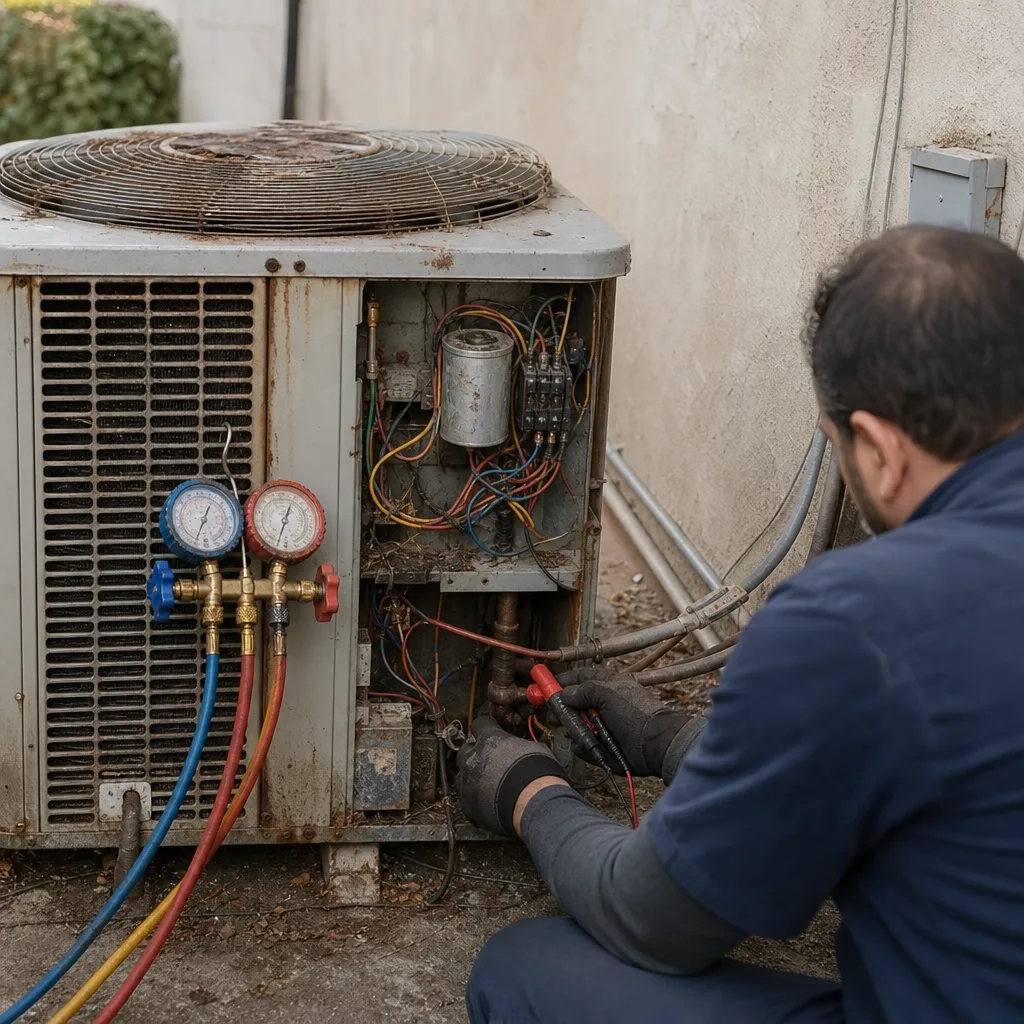 Before
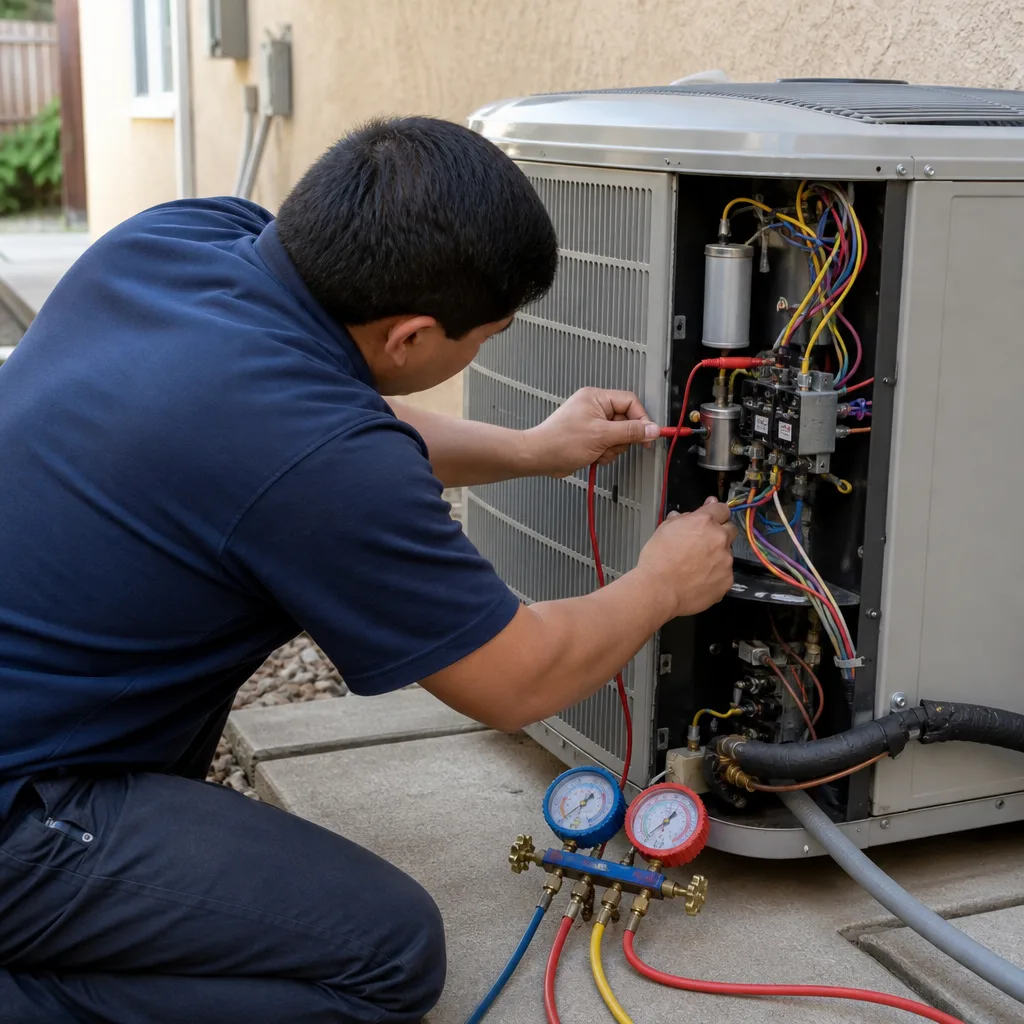 After
After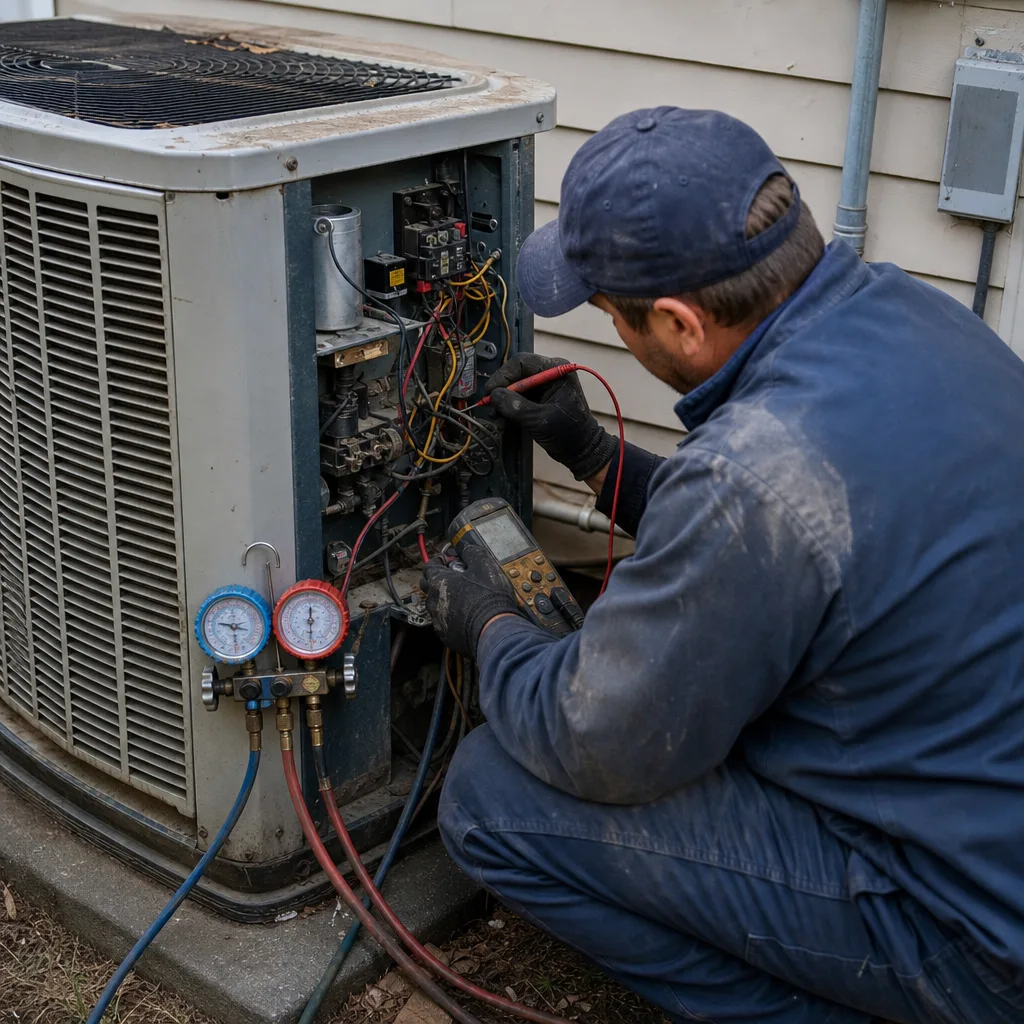 Before
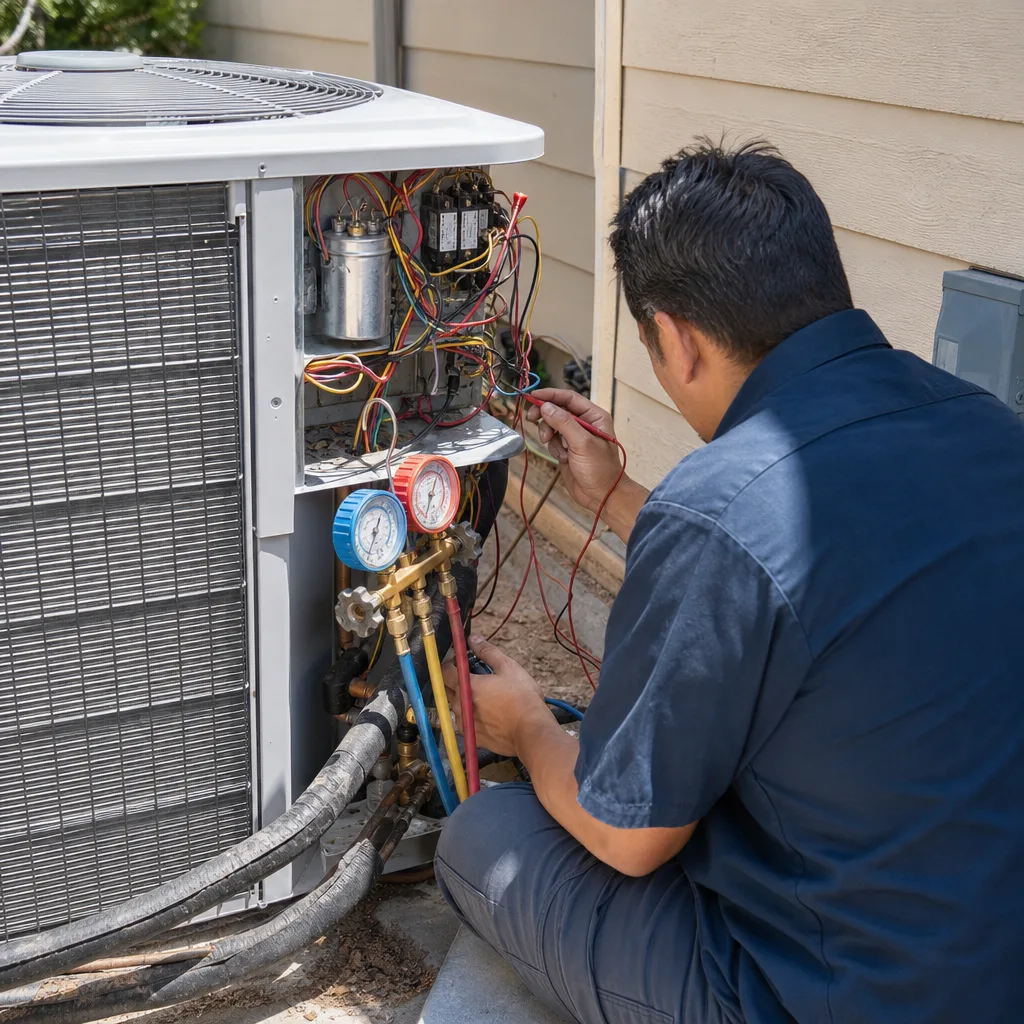 After
After Before
 After
After