
Last updated October 16, 2026
 AC repair
 Furnace & heating
 Ductless mini splits
 Trane
TraneSeasonal tune-up and full diagnostic on your Carrier, Trane, or Goodman system - readings shown to you before any repair is proposed
Diagnosis first, numbers second - you approve the repair price before a single part goes in.
Get your free estimateHow to Hire a HVAC Contractor in Pasadena: A Step-by-Step Guide
Here’s the uncomfortable truth about Pasadena HVAC work: the industry makes it easy to buy on charm and get burned on execution. A clean polo shirt and a confident handshake don’t tell you whether a contractor understands static pressure, knows how to size a duct run for a 1920s Altadena-adjacent bungalow, or will actually pull a permit on your furnace swap. What does tell you is paperwork, process, and a handful of very specific questions. This guide walks you through the exact steps a skeptical homeowner should take before signing anything, from the 45-second license check most people skip to the Manual J calculation that separates real contractors from quote machines, and points you to more guides & resources for deeper reading. In Pasadena, where housing stock spans century-old craftsman homes and new construction off the 210 corridor, the details matter more than the sales pitch.
Quick Answer
To hire an HVAC contractor in Pasadena, verify their C-20 license is active and clear on the CSLB website, require a written fixed-price quote after an in-person evaluation (never over the phone), confirm they run a Manual J load calculation on any replacement job, ask for the permit confirmation number rather than a verbal promise, and compare guarantees as one-year parts-and-labor coverage in writing, not manufacturer parts-only warranties. A contractor who skips any of these steps is guessing, and in Pasadena’s summer heat, a guess is a very expensive gamble.
Styles & brands we work with
Table of Contents
- Step 1: Run the CSLB License Check (And Understand What You’re Looking At)
- Step 2: Demand Written Pricing Before Any Work Begins
- Step 3: Ask About the Manual J Load Calculation on Replacement Jobs
- Step 4: Never Accept a Phone Quote for Major Work
- Step 5: Verify Permits on Pasadena’s Portal
- Step 6: Separate Labor Guarantees from Parts-Only Warranties
- Step 7: Ask the Questions That Reveal Trade Knowledge
Step 1: Run the CSLB License Check (And Understand What You’re Looking At)
California requires any contractor performing HVAC work over $500 to hold a C-20 license, which covers warm-air heating, ventilating, and air conditioning. That’s the law. Yet in our experience across Pasadena, fewer than one in ten homeowners actually verifies this before hiring. The check takes 45 seconds on the Contractors State License Board website. Type in the name or license number, and you’ll see a status field. Here’s what matters: “Active” means the license is current. “Clear” means there are no active suspensions or serious complaints. A license can be “Active” but not “Clear” if there’s an open disciplinary action. You want both. Look at the issue date too. A brand-new license isn’t automatically disqualifying, but a license held continuously for ten or more years with a clean record tells you the contractor has survived market cycles, building code changes, and a few hundred Pasadena attics. Here’s the sequence to follow:
- Go to CSLB.ca.gov and click “Check a License.”
- Enter the contractor’s name or license number.
- Confirm the classification says “C-20 Warm-Air Heating, Ventilating and Air-Conditioning” (not a general B license, which covers building but doesn’t prove HVAC-specific competence).
- Check the status: you want both “Active” and “Clear.”
- Check the bond. California requires a $25,000 contractor bond. If the bond shows as expired or cancelled, the license is effectively not valid even if it says active.
- Look at the listed business name versus the name on the quote. Mismatches matter.
Pasadena homeowners should also check local requirements. The City of Pasadena requires a business license for any contractor working within city limits. Ask for that number and verify it with the city’s Finance Department if you want to be thorough. Most contractors operating legally in Pasadena will have both state and city credentials and won’t hesitate to provide them.
If you’re hiring for AC repair in Pasadena, the license check is still essential. Repair work under $500 doesn’t legally require a C-20, but a licensed contractor who chooses to hold the credential even for small jobs is telling you something about how they operate.
Step 2: Demand Written Pricing Before Any Work Begins
Here’s the rule: if a contractor will not put the price in writing before starting work, you don’t have a price, you have a sales pitch with a number attached. In California, the law requires written estimates for any job over $500, but we’ve seen plenty of Pasadena homeowners handed a verbal figure and a shrug. Don’t accept it. The written quote should include a line-item breakdown of equipment, materials, and labor, a clear scope of work, a payment schedule, and a start and completion date. If you see terms like “subject to change,” “plus incidentals,” or “TBD” next to any line item, ask for it to be resolved in writing before you sign.
Three questions reveal whether the price is fixed or an estimate that will inflate at the door:
- “Is this the total price I’ll pay if nothing about the scope changes?” A real fixed price is a promise, not a suggestion. If they hedge, walk.
- “What happens if the work runs into something unexpected?” Legitimate contractors describe a change-order process. Unscrupulous ones describe “we’ll figure it out later,” which means you’ll figure out how to pay for it later.
- “Will you note on the quote that this price is guaranteed for a specific time period?” A fixed price should have an expiration date on the quote, typically 30 to 90 days. After that, material costs shift. But during the valid window, the price should not move.
Dalton Heating & Air Pasadena operates this way as a matter of policy. Every job includes a written price before any work begins. Not an estimate, not a range, not a “we’ll see.” A number, in writing, before a tool leaves the truck. That’s The Garrison Standard, and it’s been applied consistently across the Garrison Partners network since 2003. It isn’t a premium feature. It’s how quoting is supposed to work.
Step 3: Ask About the Manual J Load Calculation on Replacement Jobs
If you’re replacing a furnace, an air conditioner, or installing a heat pump in Pasadena, and the contractor quotes you a system size without running a load calculation, you are being sold a guess. A Manual J calculation measures the heating and cooling load of your specific home: square footage, ceiling height, window orientation, insulation levels, air leakage, and a dozen other factors. Without it, a contractor is using a rule of thumb like “400 square feet per ton,” which works fine until it doesn’t. Pasadena’s housing stock makes this especially dangerous. A 1,800-square-foot 1950s ranch with original single-pane windows needs a very different system than an 1,800-square-foot mid-century modern with updated glazing and attic insulation. Yet both would get the same “three-ton unit” from a contractor who doesn’t calculate.
Here’s how to ask for the calculation without sounding like an engineer:
“What load calculation did you run to determine the system size?”
That’s it. A legitimate contractor will say “Manual J” and show you the report. A salesperson will say something like “we’ve been doing this 20 years” or “this is the standard size for a home like yours.” Neither of those is a calculation. The Manual J report shows room-by-room loads, and it’s the difference between a system that maintains temperature on a 105-degree Pasadena afternoon and one that runs constantly while the upstairs stays at 82.
For a heat pump installation specifically, the load calc doubles in importance. Heat pumps are sized for both heating and cooling, and getting either load wrong means higher utility bills and shorter equipment life. Dalton performs a load calculation on every replacement job, not because it’s fast but because it’s the only way to get the system right the first time.
Step 4: Never Accept a Phone Quote for Major Work
This is the counterintuitive part of hiring a contractor: the moment someone gives you a price over the phone without seeing your equipment, your ductwork, or your electrical panel, the process has already gone wrong. A phone quote for a new furnace or AC system is not a quote, it’s a marketing number. No technician can know the condition of your ductwork from a phone call. No technician can assess your electrical panel’s capacity, your refrigerant line lengths, or your airflow without standing in your home. When a Pasadena homeowner calls us for furnace repair in Pasadena and asks for a phone estimate, our honest answer is that we can give typical ranges, but the actual quote requires an in-person visit. That’s not a dodge. That’s how the trade works.
Here’s what a legitimate in-person evaluation should include:
- Equipment inspection: age, brand, condition, and measured performance of the existing system.
- Ductwork assessment: leaks, sizing, insulation, and static pressure testing on larger jobs.
- Electrical panel review: available breaker space and amperage for new equipment.
- Home walk-through: room-by-room comfort complaints, thermostat placement, window orientation.
- Written quote delivery: in hand or via email before the contractor leaves, not “I’ll send it over later.”
If a company sends a salesperson instead of a technician, that salesperson should still be able to perform these checks. Some sales-heavy firms send closers who carry a laptop and a price sheet but never touch the equipment. Ask yourself whether you want your HVAC purchase evaluated by someone who has actually worked on systems or someone whose compensation depends on the size of the check you sign. At Dalton, the technician evaluating your home is background-checked, uniformed, and factory-trained on nine major brands including Carrier, Trane, and Lennox. They’re not paid on commission. They’re paid to give you an accurate picture.
Step 5: Verify Permits on Pasadena’s Portal
A mechanical permit is required in Pasadena for most furnace replacements, AC installations, and any work involving new ductwork or gas connections, as covered in our guide to HVAC Permits, Codes & Inspections in CA: What You Need to Know. The City of Pasadena has an online permit portal where you can verify any permit pulled at your address. Here’s what a legitimate permit pull looks like: the contractor pulls the permit before starting work, the permit number appears on the written quote or a separate document, and you can confirm it on the city’s portal within a day or two. Here’s what it doesn’t look like: a contractor who says “we handle permits” without showing you a confirmation number, or one who says “we can do it without a permit to save you money.” Saving money by skipping a permit in Pasadena means you own an unpermitted installation when you sell the house, and you’re on the hook for any code violations a future inspection uncovers.
Three things to verify on the permit document:
- The permit number. A real permit has a number you can enter into the city’s online system.
- The scope description. It should match the work being performed. A permit that says “furnace replacement” when you’re also getting ductwork is incomplete.
- The contractor’s name as the permit holder. If the permit is in someone else’s name, ask why.
Pasadena also enforces specific code requirements around equipment clearances, earthquake strapping for water heaters, and Title 24 energy compliance for HVAC replacements. A contractor who pulls permits and passes inspections is confirming their work meets these standards, not just asserting it. The final inspection signoff is your independent verification.
Step 6: Separate Labor Guarantees from Parts-Only Warranties
This is where Pasadena homeowners get misled most often. A manufacturer’s warranty covers parts, not labor. If a compressor fails three months after installation, the manufacturer sends a new compressor, but you’re paying the labor to swap it out, and that labor can run $800 to $1,500 depending on the system. When a contractor says “this comes with a warranty,” ask one question: “Does that cover labor, and for how long?”
Here’s the breakdown:
- Manufacturer parts-only warranty: typically 5 to 10 years on major components, 1 year on the full system. Parts are covered. Labor is not.
- Contractor labor warranty: covers the labor to diagnose and replace failed parts. Many contractors offer 30 to 90 days. A few offer a full year.
- Full parts-and-labor guarantee: one year is the strong standard. Anything less than that is a contractor who doesn’t stand behind their work.
Dalton Heating & Air Pasadena’s policy is a written guarantee on every repair, and it includes a free return visit if the repair fails within the guarantee period. Specifically, our 365-Day Done Right Promise covers a full year, not a 30-day window. If the work doesn’t hold, we come back at no charge. That’s not a sales line. It’s written into The Garrison Code: arrive inside the stated window, price in writing before starting, do the job by the book, leave the site clean, and stand behind the work for a full year. Marco Benitez, who leads Dalton Heating & Air Pasadena, has been held to that code since 2003.
Step 7: Ask the Questions That Reveal Trade Knowledge
You don’t need to understand refrigerant thermodynamics to evaluate a contractor. You need to ask a handful of questions and watch how they answer. A real technician answers in plain language with specifics. A salesperson deflects with vagueness or volume. Here are the questions that matter:
- “What static pressure readings did you get from my current system?” A technician who knows airflow should be able to give you a number and tell you if it’s high. A blank stare means they probably didn’t test it.
- “What’s the condition of my ductwork, and does this quote include sealing or replacement?” If the answer is “your ducts are fine” without a visual inspection of the trunk line, that’s a guess.
- “Which brands are you factory-trained to service?” We service Carrier, Trane, Lennox, Goodman, Rheem, York, Daikin, Bryant, and American Standard. Factory training means access to updated technical documentation and proper diagnostic procedures, not just YouTube and experience.
- “Do your technicians carry a recovery machine and scale for refrigerant work?” This is a detail question. The right answer is yes, and it tells you the crew does things legally under EPA Section 608 rules.
- “Will the same technician handle the job from diagnosis to completion?” Some companies send one person to diagnose, another to quote, and a third to install or repair. That hands-off chain is where details get lost. One technician seeing the job through matters.
In Pasadena, where summer temperatures routinely push past 100 degrees and the Santa Ana winds drive dust through every seam in the house, the details compound. A system that’s slightly oversized runs short cycles and leaves humidity in the air. A duct leak on the wrong side of the return draws attic heat into your cooling. A contractor who asks good questions and listens to your answers is doing part of the diagnostic work before the tools come out.
Common Mistakes to Avoid
- Hiring on price alone. The lowest bid in Pasadena often comes from a contractor who skips permits, skips the load calc, or pays cash to unlicensed workers. The cheapest quote is rarely the cheapest system.
- Accepting a phone quote. As covered above, a phone number for a furnace replacement is a marketing tactic, not a price. The contractor hasn’t seen your ductwork or your panel.
- Confusing a manufacturer parts warranty with a labor guarantee. Parts-only means you pay labor. Always ask “does this cover labor?”
- Signing a quote with vague scope language. “Furnace replacement” isn’t a scope. Get the specific equipment model, the specific work, and the specific exclusions in writing.
- Skipping the CSLB license check. It takes 45 seconds. In Pasadena, the difference between a licensed contractor and a handyman with a truck is the difference between recourse and regret when something fails.
- Ignoring the permit requirement. Unpermitted HVAC work becomes your problem at resale. Pasadena home inspectors flag it, and the fix often costs more than pulling the permit would have in the first place.
- Not asking about the brand service coverage. A contractor who only works on one brand will steer you toward that brand whether it’s the right fit or not. Factory training across multiple brands means they match the equipment to your home, not their inventory.
See the difference
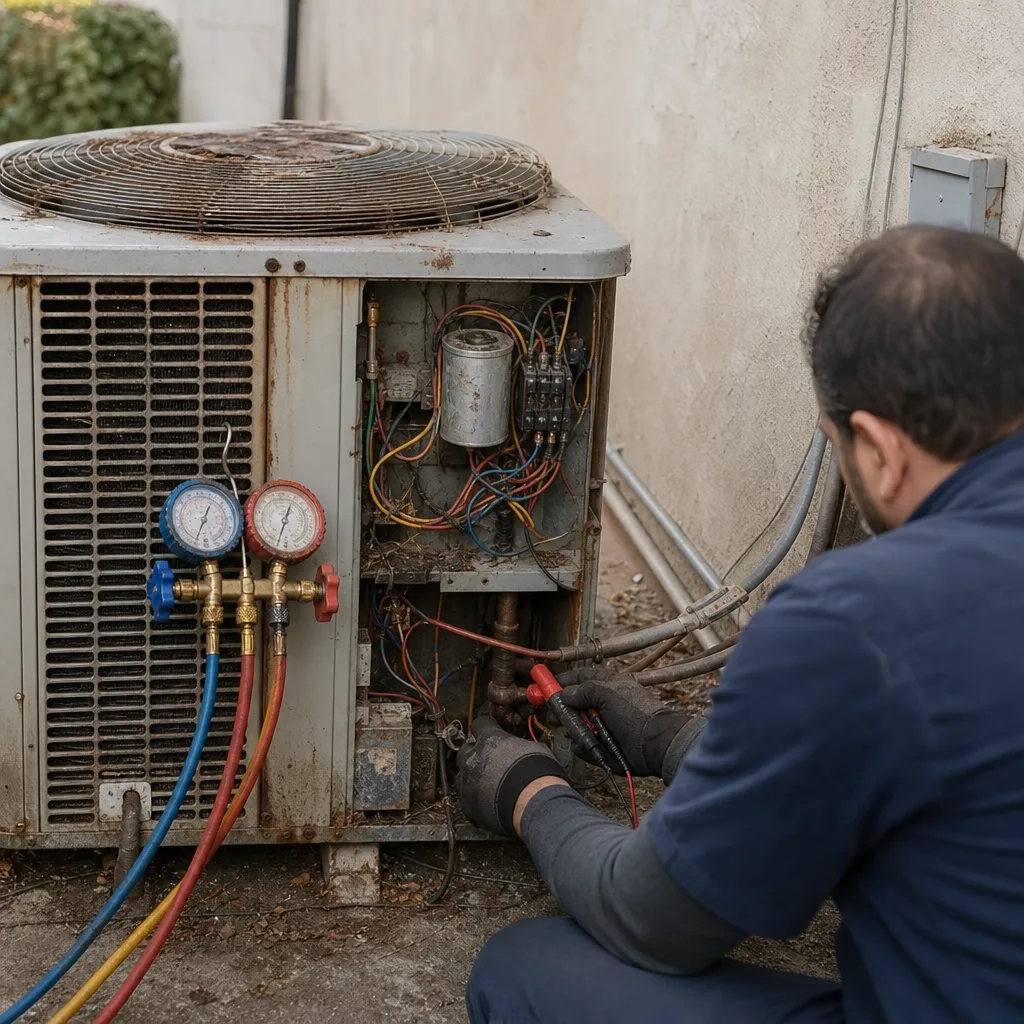 Before
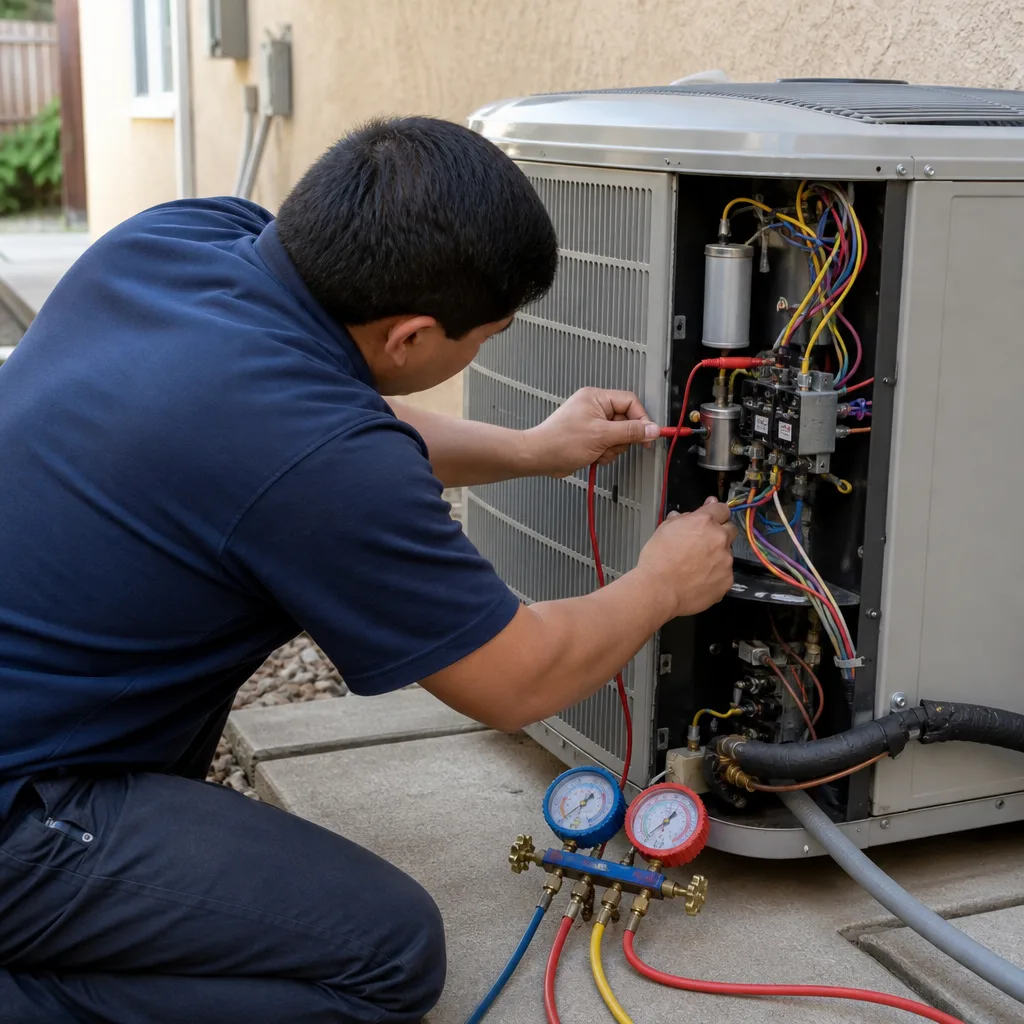 After
After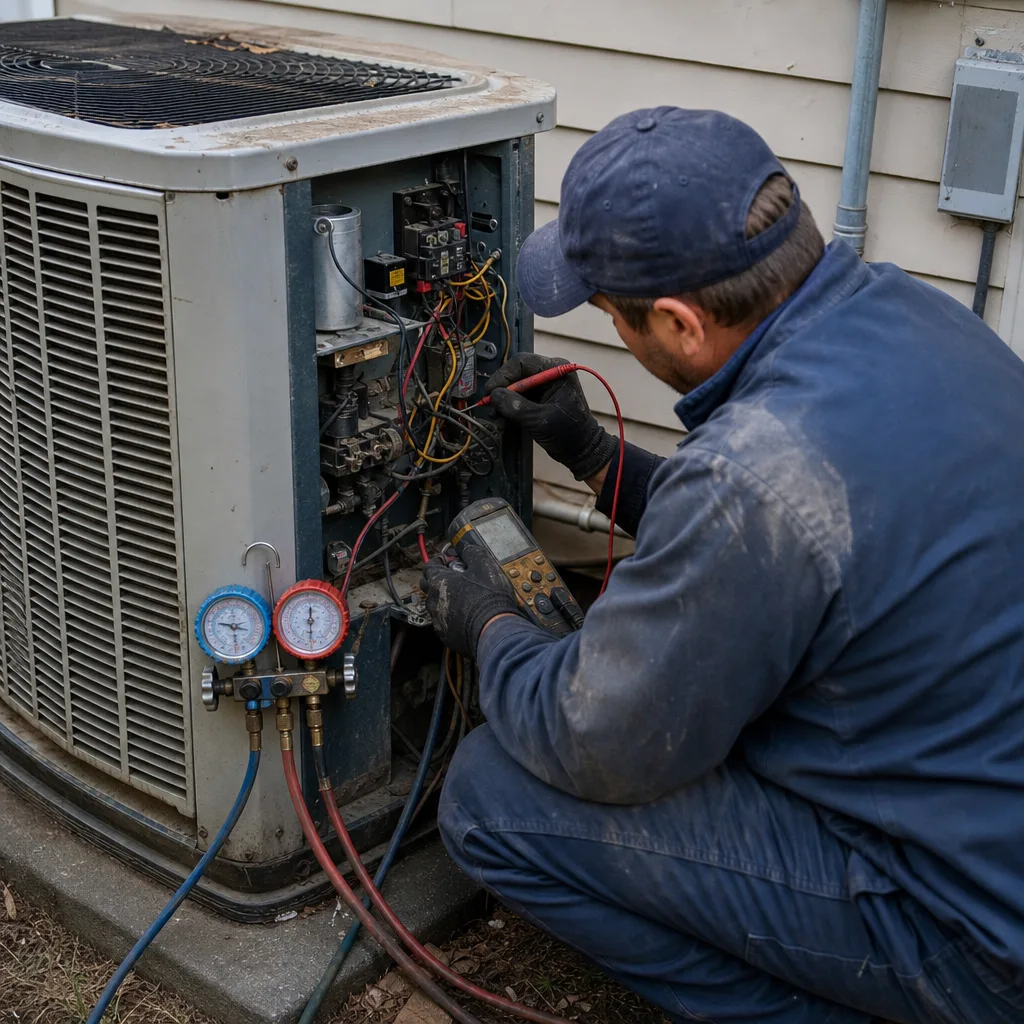 Before
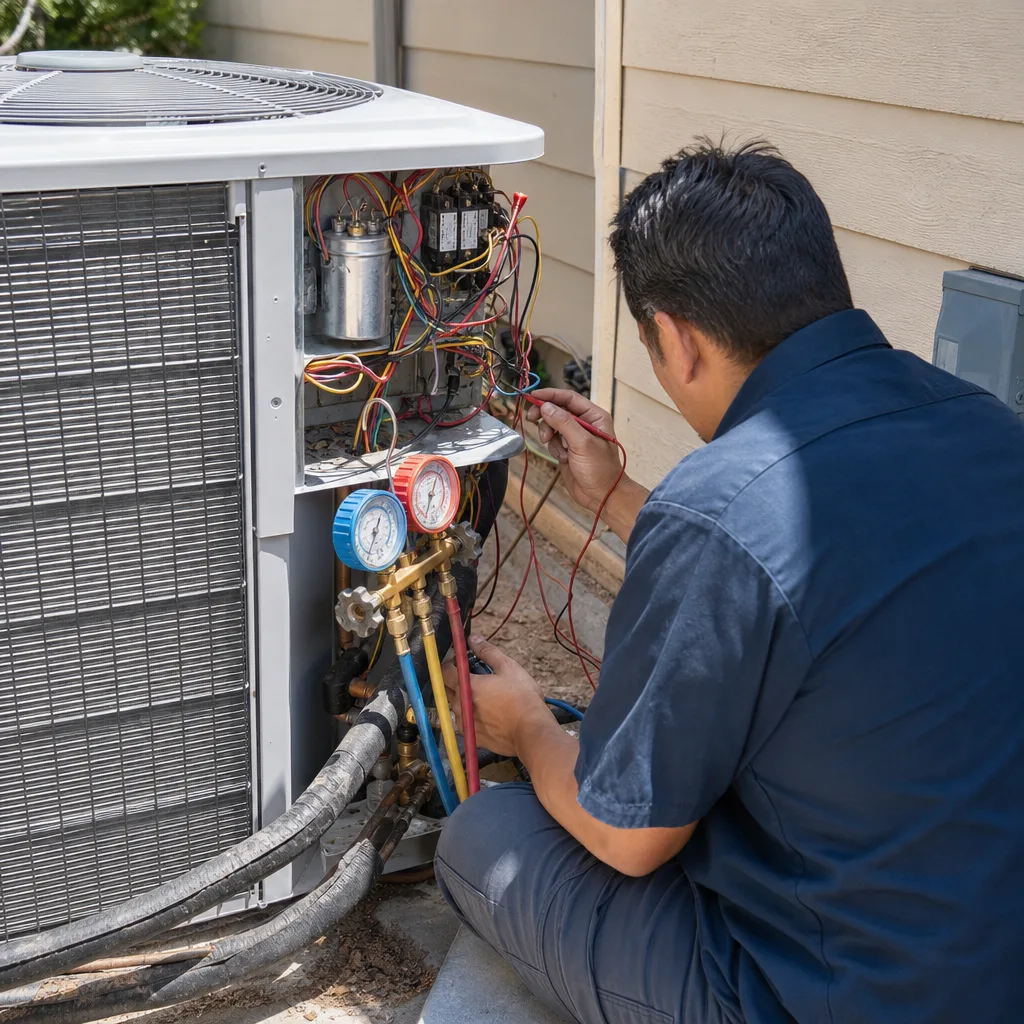 After
After Before
 After
AfterWhen to Call a Professional
Some jobs are DIY-capable: changing a filter, clearing a condensate line, checking thermostat batteries. Others are not. If your system is short cycling, making sounds it didn’t make before, struggling to reach set temperature on a hot Pasadena afternoon, or blowing warm air in cooling mode, call a licensed contractor-these are among the HVAC Warning Signs: A Pasadena Homeowner’s Reference Guide. Refrigerant work in particular is regulated by the EPA, and handling it without proper certification is both illegal and dangerous. Gas furnaces involve combustion and carbon monoxide risk, and a cracked heat exchanger is not something you diagnose from a YouTube video. Dalton Heating & Air Pasadena offers free estimates in Pasadena, and the evaluation includes a written price before any work begins. If you’re in Los Angeles County and the temperature is climbing, call (626) 657-5344 and a real person will answer, day or night.
For broader context on the systems we handle, start at the Dalton Heating & Air Pasadena home page, which links to our full service area and current availability.
Frequently Asked Questions
Service call fees in Pasadena typically run $75 – $125, with most furnace repairs running $150 – $450 depending on the part, and full system replacements ranging from $8,000 to $18,000 depending on size, efficiency, and ductwork condition-see our HVAC Cost Breakdown: The Pasadena Homeowner’s Reference for 2026 for deeper context. The exact quote depends on your system and home, which is why any legitimate contractor needs to see them in person before pricing. Call (626) 657-5344 for a free estimate with written pricing before work begins.
An HVAC contractor in California needs a C-20 license from the Contractors State License Board, which specifically covers warm-air heating, ventilating, and air conditioning. Verify the license is “Active” and “Clear” on the CSLB website, and confirm the classification matches C-20, not a general B license.
Replace the system when the repair cost exceeds 30% of replacement cost, when the equipment is over 12 – 15 years old and using R-22 refrigerant, or when the compressor or heat exchanger has failed. In Pasadena’s climate, a system that struggles through one summer will only get worse. A load calculation and system evaluation will give you the numbers to make the decision.
Dalton Heating & Air Pasadena answers calls with a live person 24/7, and we schedule service calls throughout Pasadena and surrounding areas. Emergency calls are prioritized by severity, not by who called first. If your system has failed in extreme heat or cold, call (626) 657-5344 and we’ll get a technician to you as quickly as the schedule allows.
Yes. The City of Pasadena requires a mechanical permit for most HVAC replacements and installations. A contractor who skips the permit is saving themselves time and putting the liability on you. Confirm the permit number on your written quote and verify it on the city’s permit portal.
We’re factory-trained to service nine major residential HVAC brands: Carrier, Trane, Lennox, Goodman, Rheem, York, Daikin, Bryant, and American Standard. Our technicians are not tied to a single manufacturer, so the recommendation you get matches your home’s needs rather than our inventory.
The Bottom Line
Hiring an HVAC contractor in Pasadena comes down to five verifiable actions: run the CSLB license check and confirm C-20 status, require written pricing before any work begins, demand a Manual J load calculation on replacement jobs, verify permits with a real confirmation number on the city portal, and confirm the guarantee covers labor for a full year. Contractors who meet these standards are rare. Contractors who exceed them are rarer still. Dalton Heating & Air Pasadena has been held to The Garrison Standard since 2003, and every job we perform is bound by written pricing, written guarantees, and a code that says the job isn’t done until the site is clean and the work holds for a year. If that sounds like how you want your next HVAC decision to go, call (626) 657-5344 for a free estimate.
Written by Marco Benitez, Owner at Dalton Heating & Air Pasadena, serving Pasadena since 2003.